Concept
Yeokma (the Travel Star) in Your Chart: Not a Wanderer's Fate, but a Force That Moves
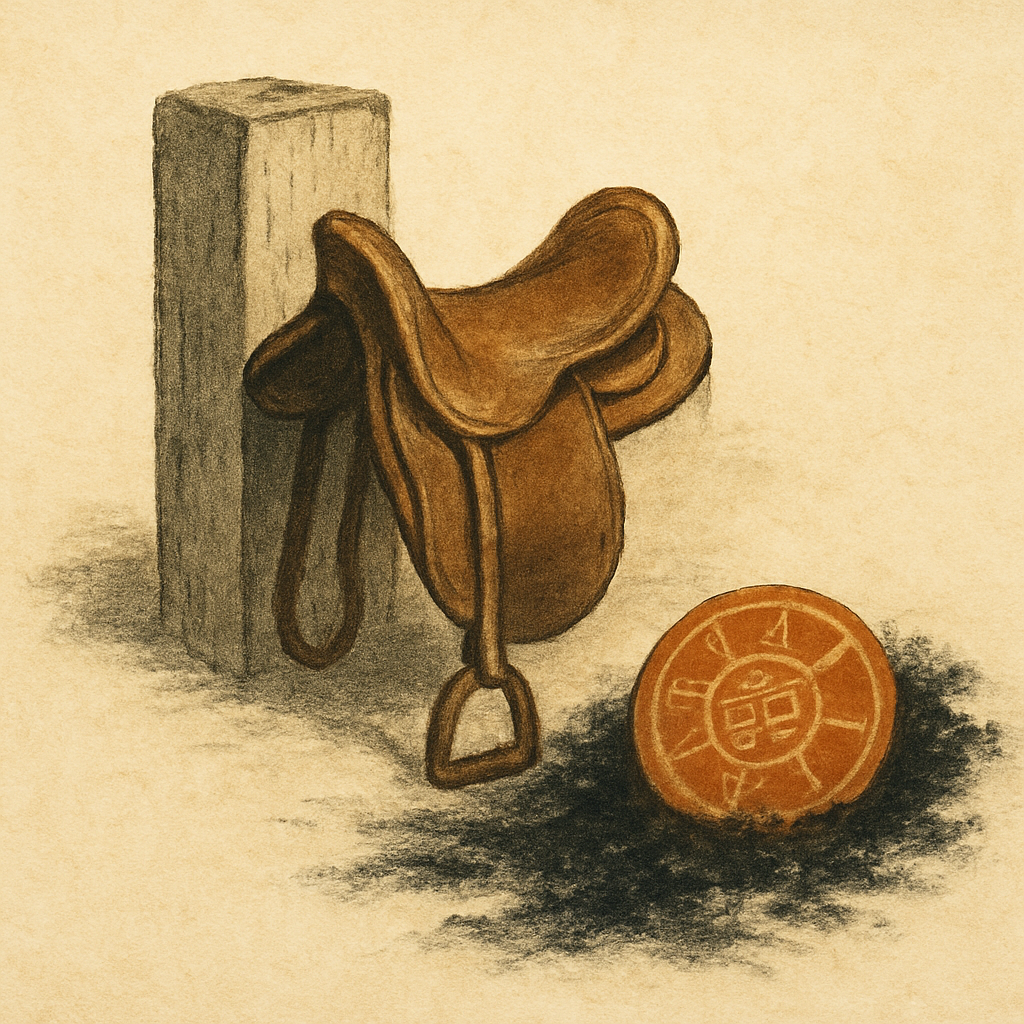
People who change jobs often, move house frequently, or find themselves on a constant stream of overseas assignments sometimes wonder whether they carry Yeokma in their chart. In classical Korean Four Pillars astrology (Saju), Yeokma was read as the image of someone saddling a horse and riding off down a long road. Today it can be reinterpreted as an energy of movement and change. This post unpacks the nature of that energy, showing why it tends to work as a driving force rather than a troublesome influence.
The Clients Who Came In
A man in his mid-thirties working in IT came for a reading. Within three years of joining his company he had moved departments three times, relocated four times, and was now in discussions about an overseas posting.
His first question was this: 'Is it Yeokma that keeps me from settling down?' The word itself, which carries the sense of a harmful influence in Korean, had been weighing on him.
Another client was a freelancer in her early forties who moved fluidly between domestic and international work. It suited her well, she felt, yet every time someone around her said she had 'caught the Yeokma energy,' she felt a pang of unease.
Both were reading Yeokma as a shortcoming or a sign of bad luck. Looking carefully at their Four Pillars charts, though, it became clear that this energy was actually functioning as the engine behind their lives.
What Yeokma Is: Found in In, Sin, Sa, and Hae
Yeokma (驛馬, literally 'post-station horse') is a type of Shinsal (신살, an auxiliary marker in Four Pillars astrology) that symbolizes the energy of movement, change, and long-distance activity. Shinsal markers arise from specific combinations of heavenly stems and earthly branches and are read alongside, rather than as part of, the main Ten Gods and Five Elements structure.
Which branches carry Yeokma
Yeokma is identified by looking at the day branch or year branch and finding the branch that sits in the opposing direction of that group's Three Harmony combination. In plain terms:
- Day or year branch in In, O, or Sul: Sin (申) carries Yeokma
- Day or year branch in Sa, Yu, or Chuk: Hae (亥) carries Yeokma
- Day or year branch in Sin, Ja, or Jin: In (寅) carries Yeokma
- Day or year branch in Hae, Myo, or Mi: Sa (巳) carries Yeokma
In, Sin, Sa, and Hae are collectively known as the Four Birth Branches (사생지, the four branches that open each season). They carry a vigorous, initiating energy, which is precisely why the Yeokma force concentrates here.
Yeokma may appear in just one position of a chart, or it may appear in multiple positions such as the month, day, and hour branches. When it appears more than once, the frequency and range of movement in a person's life tends to be noticeably greater.
How the Old Image of 'Wandering' Reads Today
When classical astrology took shape, Yeokma represented people who rode out on long journeys: royal envoys, merchants, soldiers. A life away from home was a hard one back then, which is why the marker was given the name it has.
Times are different now. Mobility and adaptability are genuine competitive strengths. The Yeokma energy tends to show up in modern life in forms like these:
- The stamina and adaptability to handle frequent business trips and overseas postings
- A flexible mobility that lets someone build a broader career through well-timed moves
- A low resistance to relocating or changing where you live
- The ability to build a network quickly in unfamiliar surroundings
- A natural fit with remote work and digital-nomad ways of working
Yeokma is less about being 'fated to never rest' and more about having a constitution that feels stifled when it stands still too long.
That said, the picture is not simply a positive one across the board. Whether this energy flows in a constructive or draining direction depends on how it sits within the overall chart structure.
When Yeokma Works in Your Favor vs. When It Drains You
Having Yeokma in a chart does not automatically mean constant movement, nor does it mean constant restlessness. Its effect is shaped by the full chart structure and the cycle of major and annual luck periods (대운 and 세운).
Conditions under which Yeokma may work in a favorable direction
- When Yeokma shares the same elemental group as the yongsin (the favorable element): movement tends to bring good things
- When Yeokma combines with the Wealth Star (재성) or the Authority Star (관성): movement can bring material gains or recognition
- When Yeokma forms a Three Harmony or Directional combination: the momentum behind movement becomes even stronger
Conditions under which Yeokma may work in a draining direction
- When Yeokma shares the same elemental group as the gisin (the unfavorable element): frequent movement may wear down energy and focus
- When Yeokma overlaps with a clash (충): movement can become unstable or repetitive without clear purpose
- When Yeokma falls into an empty void period (공망): moves made during that time may be difficult to bring to fruition
Reading Yeokma in isolation does not give you much. The day pillar, month pillar, and the current major luck cycle all need to be considered together. That is exactly why it helps to look at the whole structure rather than getting caught up in the name of a single marker.
Yeokma and Career Fit: What Kinds of Work Suit It
When Yeokma operates strongly in a chart, roles that involve built-in variety and movement can be a better fit than positions that call for long stretches of repetitive, desk-bound work.
Here are some fields worth considering when thinking about career direction:
- Sales, trade, and distribution: roles that involve going out to meet clients and partners directly
- Overseas postings and international work: positions where cross-border movement is a regular part of the job
- Freelance and consulting: project-based work where the environment changes with each engagement
- Transport, logistics, and aviation: fields where movement is the core of the work itself
- Travel, media, and content creation: work that means going to the place where the story is
Career decisions should never rest on Yeokma alone. The placement of the Wealth Star, the strength of the Authority Star, and the full Ten Gods structure all need to be read together. If you are curious about career direction, the career Saju reading is a good place to explore that further.
How Saju Can Help in This Situation
When looking at a chart that carries Yeokma, the most important question is: which direction is this energy flowing in right now?
If you are weighing a career move and your current major luck cycle is activating Yeokma in a supportive way, there is a good chance that moving is the right call. If Yeokma is overlapping with the unfavorable element during this stretch, it may be worth taking more care with the timing.
Saju is not a tool for declaring whether someone is 'fated to wander' or 'fated to settle.' It is closer to a map for looking at your own temperament and the current of your life with a clearer eye.
Yeokma is not a verdict of rootlessness. It is a compass that can show you where and how to move so that the movement becomes a source of strength.
If you are facing a job change, a move, overseas work, or a shift in direction and you want to understand how the Yeokma energy in your chart is working right now, a Four Pillars reading can walk through the full structure with you. It is a calm, grounded way to get a clearer sense of where your current chapter is heading.