Concept
Zodiac Sign Compatibility vs. Saju Compatibility: What's the Difference?
When people first get to know someone, one of the earliest questions tends to be: 'Are our zodiac signs compatible?' Yet two people with perfectly matched signs can feel oddly misaligned in real life, while a pair told their signs clash may get along surprisingly well. This post walks through what each method actually looks at, and what each one misses.
What Is Zodiac Sign Compatibility?
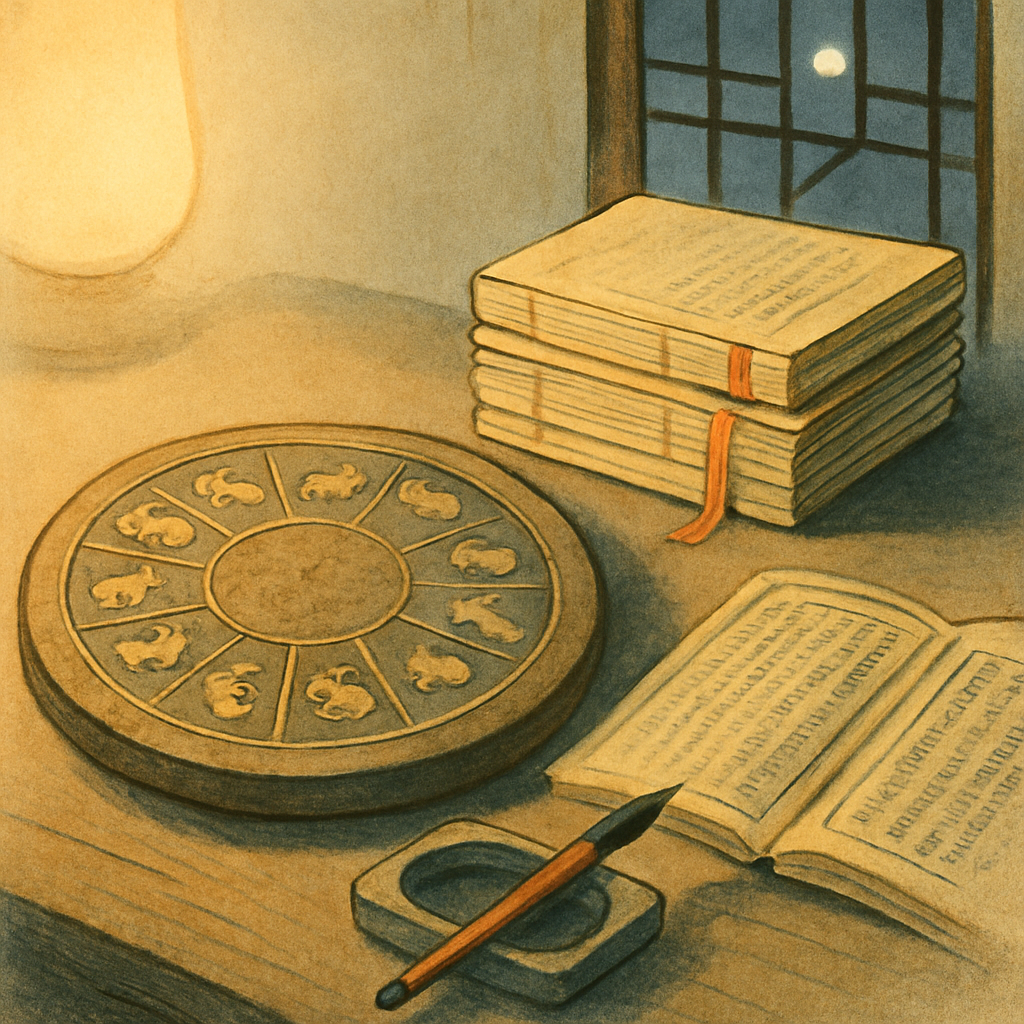
Zodiac sign compatibility works by taking one piece of information from each person: the earthly branch of their birth year, called the yeonji (年支, birth-year branch). The twelve branches, Rat, Ox, Tiger, Rabbit, Dragon, Snake, Horse, Goat, Monkey, Rooster, Dog, and Pig, are then compared as a pair to identify relationships such as mutual support, clash, three-harmony combinations (삼합, Sanhap), or wonjinsal (a particular friction pairing).
For example, someone born in a Rat year and someone born in a Horse year form what is called a Ja-O clash (子午沖), which is often described as a strong conflict. Meanwhile, Tiger, Horse, and Dog years together form a fire three-harmony combination. All of these judgments flow from a single character: the birth-year branch.
Because anyone can look up a combination chart knowing just the twelve signs, this method is very accessible. That accessibility, however, comes with a significant limitation: the range of information it draws on is quite narrow.
What Does Saju Compatibility Look At Beyond That?
Saju compatibility (Korean Four Pillars astrology compatibility) takes both people's full charts, eight characters each, covering the year pillar, month pillar, day pillar, and hour pillar, and lays them side by side. Rather than a single birth-year branch, it examines the relationships among four heavenly stems and four earthly branches, sixteen characters in total.
The day pillar in particular is considered the most direct expression of a person's core nature and the way they relate to others. That is why practitioners of Korean astrology tend to look at the day pillar first when reading a compatibility chart.
- Harmony, clash, and control between the two day stems: reveals how each person's temperament tends to respond to the other's.
- Month branch comparison: shows how closely the two people's emotional patterns and daily rhythms align.
- Favorable element (yongsin, 用神) and unfavorable element (gisin, 忌神) relationship: helps gauge whether the other person tends to support or disrupt your natural flow.
- Major luck cycle comparison: looks at what kind of energy each person may be moving through during the same period of life.
Why Can Two People with the Same Sign Feel So Different Together?
Two people born in the same year share the same birth-year branch. By zodiac sign compatibility standards, they form an identical pairing with anyone born that year. Their actual Four Pillars charts, however, can be entirely different.
Consider two people born in the same Gapja year: one born in spring and one born in winter already have different month branches. Factor in the time of birth and the day pillar and hour pillar change as well. Of the eight characters in a full chart, those two people share only the two characters of the year pillar.
From the perspective of a full Four Pillars reading, the idea that 'same sign means same compatibility' simply does not hold up. The birth-year branch is just one of four pillars, and it is the outermost one at that.
When a 'Good' Sign Match Still Feels Difficult
Sometimes a pairing is considered favorable by zodiac sign standards, yet the relationship still feels like hard work. Looking through the lens of saju compatibility, a few patterns often emerge.
First, there may be a strong clash or control dynamic between the two day pillars. The birth-year branches might form a three-harmony combination, but if the day stems tend to suppress each other, the relationship can leave both people feeling gradually drained the more time they spend together.
Second, the two people's major luck cycles may be running in opposite directions. If one person is moving through a period of stability while the other is in a period of change, their daily rhythms can pull apart in ways that feel hard to name. This kind of mismatch is simply invisible at the level of birth-year branch comparison.
Zodiac sign compatibility shows you the door to a relationship. Saju compatibility lets you look at the whole room behind it.
How to Think About and Use Each Method
Zodiac sign compatibility is not wrong. The birth-year branch carries something real: a sense of the social environment and generational sensibility a person grew up in. It can be a useful rough indicator of the broad texture shared by people who came of age in similar times.
That said, if you want to understand a relationship with more nuance, comparing all eight characters through saju compatibility offers far richer information. It can reveal how two people's temperaments tend to mesh, how their communication styles may complement or chafe against each other, and what the energy of the time they share might look like.
A practical way to think about it: zodiac sign compatibility works well as a quick first impression check, while saju compatibility serves as a deeper tool for exploring the possibilities and rhythms of a relationship.
If You Want to Look More Deeply
If you would like to go beyond a single birth-year branch and lay both people's full charts side by side, Sajagung's compatibility readings walk through the day pillar, month branch, and favorable element flow together.
Whether you have been told your signs 'don't match' and feel unsettled by that, or you have been told they 'do match' but the relationship feels harder than expected, spreading out all eight characters can be a meaningful place to start.