Practical
Feeling Uncertain Before an Exam or Interview? How to Choose Your Direction with Gi-mun-dun-gap
Before an important exam or interview, most people feel the urge to do something, anything, to tip things in their favor. Some rearrange where they sleep. Others trust a quiet instinct when choosing a seat in the exam hall. Gi-mun-dun-gap (Korean directional divination) gives that vague instinct a concrete foundation. Today we share a practical perspective on choosing your direction for the day of your exam or interview.
The Kinds of People Who Come to Us
Not long ago, a man in his early thirties came to Sajagung with a major corporate final interview just one week away. By his own assessment, his qualifications and preparation were solid. Even so, he said he could not shake the feeling that he wanted to take care of one more thing.
Around the same time, a woman in her late twenties preparing for a national licensing exam reached out for a reading. She had heard that seating in the exam hall would be open, and she came in with a straightforward question: where should she sit? Neither of them was looking for a guarantee. They simply wanted to know they had left nothing undone.
That feeling is not anxiety. It is diligence wearing a different face. Gi-mun-dun-gap is a tool that puts a small, reliable compass into the hands of people who feel exactly that way.
What Directions Mean in Gi-mun-dun-gap
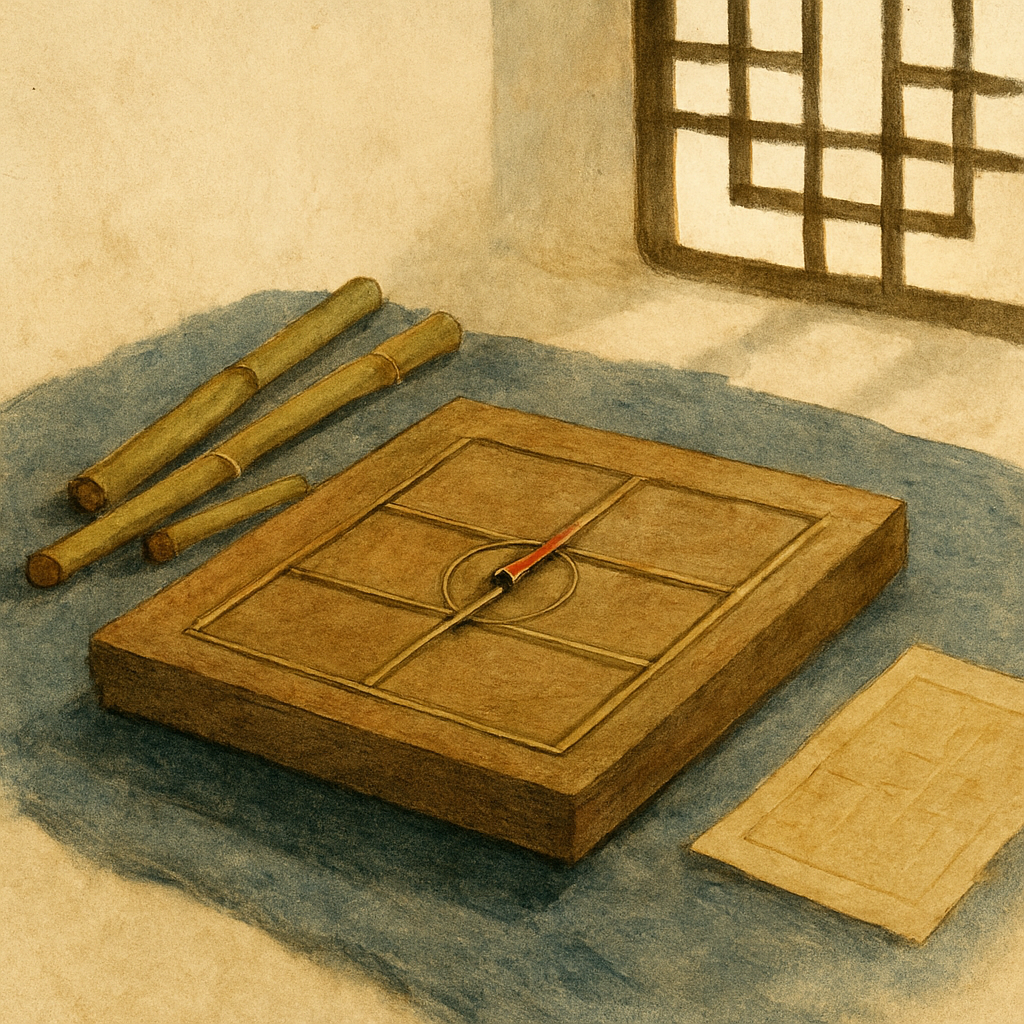
Gi-mun-dun-gap is an East Asian directional system that reads time and space together as a single map. It calculates how the energies of a given year, month, day, and hour are distributed across the eight cardinal and intercardinal directions, then identifies which direction tends to be favorable at a specific moment.
Auspicious Gates and Auspicious Directions
The system works with eight gates. Among them, the Open Gate, the Life Gate, and the Rest Gate are considered the three auspicious gates. They carry energies suited to fresh starts, new connections, and events where you hope for a positive outcome, such as exams. The direction in which one of these auspicious gates falls on a given day becomes that day's auspicious direction.
In contrast, the directions occupied by the Shock Gate and the Death Gate tend to carry energies of friction and blockage, so they are worth avoiding before an important challenge. Because this arrangement shifts with every year, solar term, date, and hour, the calculation needs to be anchored to the actual date and time of your exam to be meaningful.
A direction is not a fixed answer. It is a map of how energy is flowing at that particular moment on that particular day.
How to Use Direction and Seating on the Day of Your Exam or Interview
There are two main ways to apply Gi-mun-dun-gap directions in an actual exam hall or interview room: your departure direction and your seating direction.
Departure Direction: Leaving the House
If the auspicious direction for the day is east, you step out your front door facing east as your very first movement. It is not a grand ritual. It is closer to a psychological alignment, a deliberate choice to open your day toward a favorable flow of energy. Think of it like opening a window toward the morning sun. You are simply choosing the brighter side.
Seating Direction: When You Can Choose Your Seat
In an exam hall where open seating is allowed, you can choose a seat where you are either facing or sitting with your back toward the auspicious direction. For example, if the auspicious direction that day is north, you would look for a seat that lets you face north. In an interview setting, there may be an even stronger flow when the direction you face toward the interviewers happens to align with your auspicious direction for the day.
Calculating a Gi-mun-dun-gap direction requires your date, time, and birth information together, so having a professional reading done will give you far more accurate results than attempting the math yourself.
A Hybrid Reading: Linking Your Favorable Element to Direction
To use Gi-mun-dun-gap directions with even more precision, it helps to look at the yongsin (favorable element) drawn from your personal Saju (Korean Four Pillars astrology). The yongsin is the elemental energy your chart most needs, the one that brings it back into balance.
- Wood as your favorable element: the eastern direction and spring energy tend to bring vitality.
- Fire as your favorable element: the southern direction can support sharper focus and concentration.
- Metal as your favorable element: the western direction often helps clarity and decisiveness surface.
- Water as your favorable element: the northern direction may support wisdom and the ability to process information.
- Earth as your favorable element: the center, or time periods when earth energy is strong, can provide a grounding sense of steadiness.
When the auspicious direction Gi-mun-dun-gap points to on your exam day happens to match the direction associated with your favorable element, that seat can feel unusually comfortable and conducive to deep focus. The two do not have to line up perfectly. Attending to just one of them is already meaningful.
By the same token, the direction tied to your kwisin (unfavorable element), the elemental energy that tends to throw your chart off balance, is generally worth steering around. This is the heart of a hybrid reading: weaving Saju, the five elements, and physical space into a single, coherent picture. It is not grand feng shui or esoteric ritual. It is a practical connective framework.
What Direction Can and Cannot Do
One thing is worth saying plainly. A favorable direction cannot replace preparation. Just as setting out on a clear day does not guarantee a smooth journey, an auspicious direction is better understood as a condition in which the strength you have already built may express itself more fully.
The real value of attending to direction lies in the psychological steadiness it can bring: the quiet knowledge that you have done everything within your reach. When tension eases, ability tends to show up more clearly. In an exam room, that small confidence is rarely as small as it sounds.
A compass does not choose your destination. It simply shows you which way you are facing right now.
Find Your Personal Direction Before Your Exam or Interview
Sajagung offers a Gi-mun-dun-gap direction reading that works out your auspicious direction for the day alongside your personal favorable element, using your exam date, the time of day, and your birth information.
We lay out the specifics clearly: which seat to choose on the day of your interview, which direction to step toward when you leave home, and how to think about your route. Nothing elaborate is required. Sometimes simply having a map in hand changes how you walk.
If an important day is on the horizon, a Gi-mun-dun-gap direction reading at Sajagung can be the last piece of preparation you set in place. The outcome belongs to you and everything you have worked for. Direction is simply the quiet current that helps what you have built shine through.