Concept
How Often Does Samjae Come Around? The 12-Year Cycle and Its Three-Year Arc
Samjae (a three-year period of heightened caution in Korean fortune-telling) is a term most Koreans grow up hearing, yet if someone asks exactly how often it comes, the answer rarely comes easily. Once you understand the structure, that it returns every 12 years and stays for 3, Samjae starts to look a little different. Less something to fear, more something to prepare for. Let's look at it from that angle.
When the Timing of Samjae Feels Confusing
Not long ago, a woman in her early thirties came in for a reading. She said she had been hitting a lot of walls lately and wondered if she might be in Samjae. When she looked it up, she found mentions of both last year and this year. Her question was simple: does Samjae really come around that often?
Quite a few people share that confusion. A friend mentions one set of Samjae years, a web search turns up another, or someone who thought Samjae lasted one year suddenly hears it runs for three. Getting the cycle straight clears all of that up at once.
The Basic Structure of Samjae: Once Every 12 Years, Staying for 3
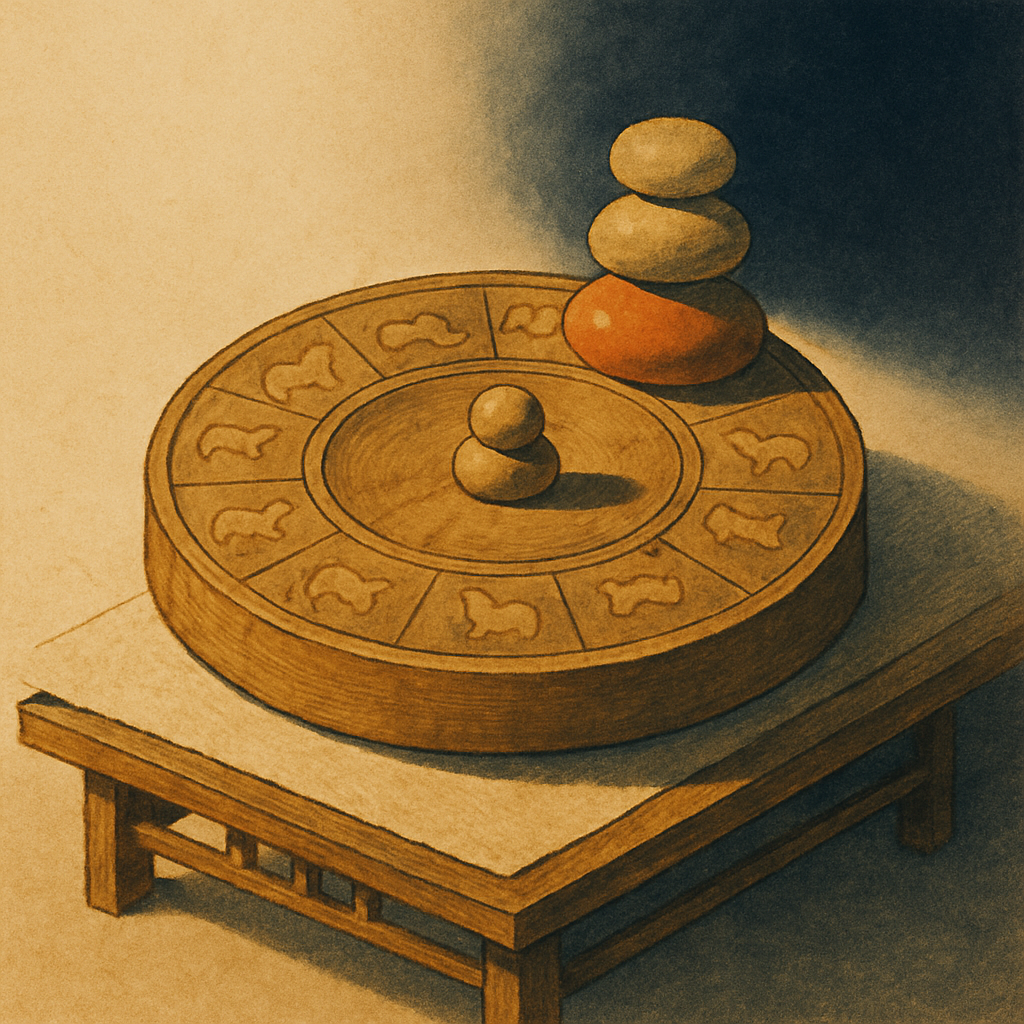
Samjae (literally "three hardships") moves in a 12-year wheel. Each time it arrives, it stays for three years before moving on. Three years out of every twelve means a person spends roughly one quarter of their life in and around a Samjae period.
Each of the three years has its own name. The first year, when Samjae enters, is called Deul Samjae (the entering year). The middle year, when its presence is most settled, is Nul Samjae (the deepening year). The final year, when it begins to withdraw, is Nal Samjae (the departing year). The arc resembles the way a deep winter begins, intensifies, and then gradually releases.
- Entering Samjae: the year the energy of Samjae first arrives. A new sense of tension tends to surface.
- Deepening Samjae: the year Samjae settles in most fully. This is often when its weight feels most noticeable.
- Departing Samjae: the year Samjae begins to lift. A time for wrapping up and letting go.
The Samjae and fortune reading at Sajagung looks at the character of each of these three years in relation to your zodiac sign and day pillar.
How to Work Out Your Own Samjae Years
Samjae is determined by your year of birth and the zodiac sign (띠, ti) it carries. The twelve signs are grouped into four sets, and each set shares the same Samjae years. These groupings are known as Samhap (three-harmony) groups.
Samjae Groups by Zodiac Sign
- Tiger, Horse, Dog: Samjae falls in the years of the Pig, Rat, and Ox.
- Monkey, Rat, Dragon: Samjae falls in the years of the Tiger, Rabbit, and Dragon.
- Snake, Rooster, Ox: Samjae falls in the years of the Snake, Horse, and Goat.
- Pig, Rabbit, Goat: Samjae falls in the years of the Monkey, Rooster, and Dog.
Take the Horse sign as an example. It belongs to the Tiger, Horse, Dog group, so the Year of the Pig brings the entering phase, the Year of the Rat the deepening phase, and the Year of the Ox the departing phase. After that, the next Samjae returns 12 years later in the same pattern.
The 12-year clock never stops. After a Samjae period passes, there are 9 years of open ground before the next three-year arc begins again.
Why Knowing the Cycle Makes It Less Daunting
Many people experience Samjae as something that swoops in without warning. But once you understand the cycle, the feeling shifts. Knowing when it comes is itself a small but real comfort.
A Samjae period does not mean everything goes sideways. Plenty of people have married, started businesses, or moved during these years and done so well. In Korean astrology, Samjae is a signal that a certain kind of energy is worth watching, not a verdict on how things will turn out.
Settling and steadying your energy during the entering year, pulling back from overextension during the deepening year, and focusing on completion and gratitude during the departing year: this is the most grounded way to work with the Samjae cycle.
When Samjae Meets Your Four Pillars Chart
Samjae is calculated from your zodiac sign, but reading it alongside your full Saju (Korean Four Pillars astrology) chart reveals a much finer picture. The Ten Gods (십신, the relational energies) in your day and month pillars, combined with the elemental quality of that year's annual fortune (歲運, the yearly cycle), mean the weight of any Samjae period can feel quite different from one person to the next.
A reading with a man in his mid-forties comes to mind. He was in his deepening year of Samjae, and his day pillar carried a strong authoritative energy. The year's cycle was reinforcing that same quality. He described a period of unusually sharp tension at work, and together we explored where that pressure was coming from.
Reading Samjae not simply as a difficult year but as a year in which a particular kind of energy tends to intensify: that is what a Four Pillars reading can add to the picture.
If Samjae Is on Your Mind Right Now
Samjae arrives once every 12 years and stays for 3. It is not something to fear, it is a rhythm you can recognize and meet with preparation. Understanding the cycle is the first step, and reading it alongside your own Four Pillars chart is the second.
If you want to know whether you are in your entering, deepening, or departing year right now, and what that may mean in practice, Sajagung's Samjae and fortune reading looks at your zodiac sign and day pillar together to map out the shape of this period for you.
Samjae comes the way seasons do. There is a real difference between meeting winter knowing it is winter and being caught off guard by the cold.