Concept
The 14 Major Stars of Zi Wei Dou Shu: A Clear Guide to All Fourteen
When you first encounter Zi Wei Dou Shu (Purple Star astrology), the fourteen major stars are the first thing you meet. These stars are not mere symbols. They form a rich symbolic system that reflects a person's character, talents, and the shape of their relationships. Once you understand how the 14 major stars are structured, the entire chart becomes far easier to read.
Why 14 Major Stars: The Framework of the Chart
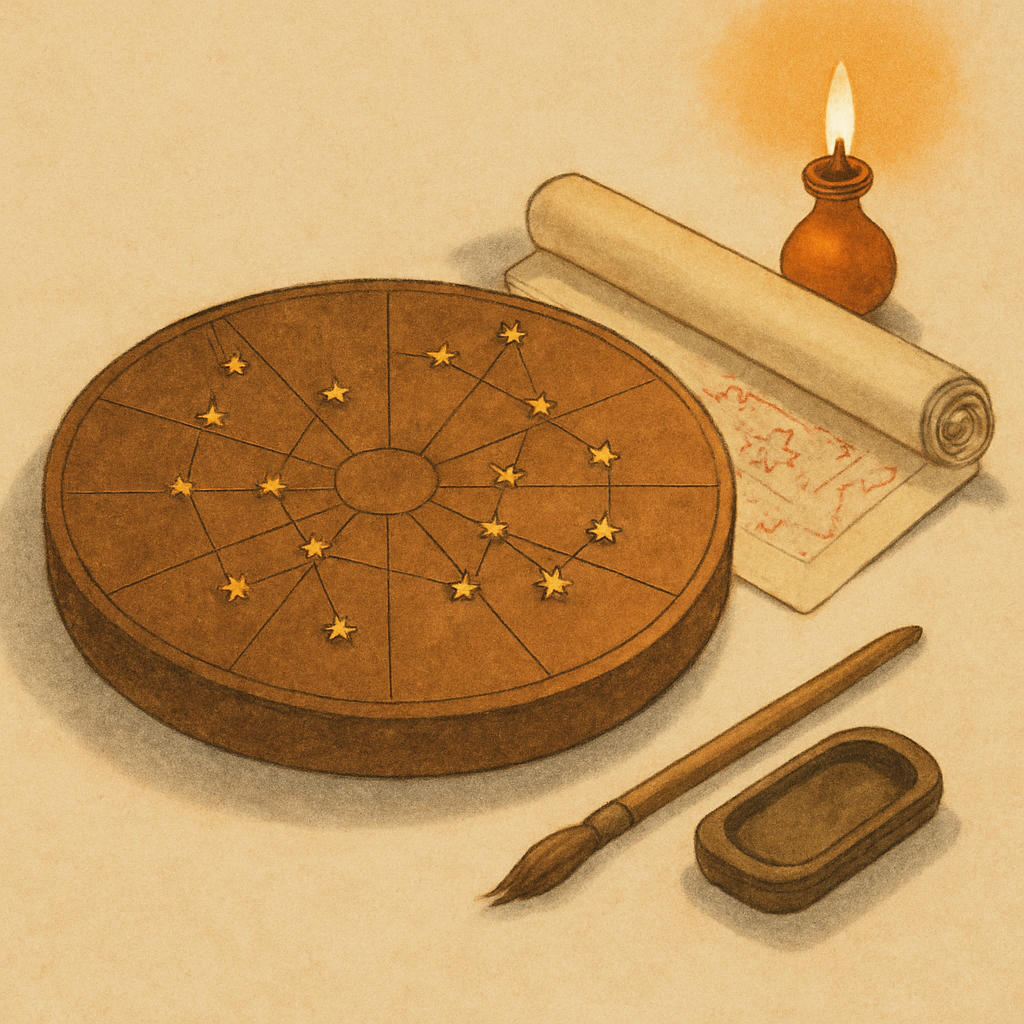
Zi Wei Dou Shu is a practice that places stars across a chart divided into twelve palaces, then reads a person's life through those placements. The 14 major stars form the backbone of that chart.
Supporting stars tend to add color, such as emphasizing particular events or adjusting the strength of certain energies. The major stars, by contrast, define the essential character of each palace. The same Life Palace can describe a very different person depending on which major star sits inside it.
Before trying to memorize all fourteen stars individually, the key is to first understand them as two distinct clusters. Grouping them into the six stars of the Zi Wei cluster and the eight stars of the Tian Fu cluster makes each star's position and role much easier to retain.
In short: the 14 major stars are the framework of the chart, and viewing them as two clusters brings the whole structure into focus at once.
The Zi Wei Cluster: Six Stars Radiating from the Center of the Sky
The Zi Wei cluster is anchored by the Zi Wei star, with Tian Ji, Tai Yang, Wu Qu, Tian Tong, and Lian Zhen grouped alongside it. Once the Zi Wei star takes its place in the chart, the remaining five stars fall into position at set intervals.
The character of each of the six Zi Wei cluster stars
- Zi Wei star: the Emperor's star. It tends to reflect themes of leadership, self-regard, and the capacity to guide others. You can explore it in depth at A Closer Look at the Zi Wei Star.
- Tian Ji star: governs wisdom and change. It can bring sharp analytical ability and a naturally strategic way of thinking.
- Tai Yang star: the star that radiates light. It often reflects social activity, public reputation, and the flow of external relationships.
- Wu Qu star: the star of wealth and willpower. It tends toward decisive action and a keen instinct for financial matters.
- Tian Tong star: the star of blessings and good fortune. It carries a gentle, receptive energy and often inclines a person toward seeking peaceful surroundings.
- Lian Zhen star: where desire and discipline meet. It can bring passionate energy alongside a deep inner commitment to principle.
In short: the six Zi Wei cluster stars radiate outward from the Zi Wei star as their axis, each carrying one of six currents: leadership, wisdom, reputation, wealth, good fortune, and passion.
The Tian Fu Cluster: Eight Stars That Fill the Earth's Energy
The Tian Fu cluster is anchored by the Tian Fu star, with Tai Yin, Tan Lang, Ju Men, Tian Xiang, Tian Liang, Qi Sha, and Po Jun arranged around it. The Tian Fu star and the Zi Wei star always form a symmetrical pair on opposite sides of the chart, and understanding this relationship is the key to grasping both clusters.
You can continue reading about the Tian Fu cluster at A Closer Look at the Tian Fu Star.
The character of each of the eight Tian Fu cluster stars
- Tian Fu star: the treasury star. It tends to reflect themes of stability, accumulation, and careful, conservative judgment.
- Tai Yin star: the moon star. It often points to sensitivity, intuition, and a rich inner life.
- Tan Lang star: the star of desire and talent. It can bring wide-ranging curiosity and a natural personal magnetism.
- Ju Men star: the star of language and dispute. It tends toward strong self-expression and logical thinking, though it can also attract controversy.
- Tian Xiang star: the star of proper bearing. It often reflects a concern for courtesy and appearances, along with a desire for harmony.
- Tian Liang star: the star of elders and healing. It carries an energy of upholding principles, protecting others, and stepping in as a mediator.
- Qi Sha star: the commander's star. It can bring intense drive, an independent spirit, and at times a tendency toward direct confrontation.
- Po Jun star: the star of pioneering and transformation. It carries an energy that tends to break with existing structures and forge new directions.
In short: the eight Tian Fu cluster stars divide eight textures of life among them: stability, sensitivity, desire, language, courtesy, principle, drive, and transformation.
Reading the Two Clusters Together: The Symmetry of Zi Wei and Tian Fu
The Zi Wei cluster and the Tian Fu cluster do not exist independently of each other. Whenever the Zi Wei star settles into a particular palace, the Tian Fu star will always appear in the palace directly across from it. Together, the two stars form the central axis of the entire chart.
Once you understand this structure, you can sketch the approximate positions of all 14 major stars simply by locating the Zi Wei star. In practice, finding the positions of the Zi Wei star and the Tian Fu star is the very first step when you open a chart.
Three things to check when reading by cluster
- Start by identifying which palaces hold the Zi Wei star and the Tian Fu star.
- Use the symmetrical relationship between the two to estimate the approximate positions of the remaining major stars.
- Read each star by layering its core character over the meaning of the palace it occupies.
In short: locating the Zi Wei and Tian Fu stars and noting their symmetry is the quickest way to get your bearings among all 14 major stars.
Reading an Empty Palace: When No Major Star Is Present
Among the twelve palaces in a chart, some will have none of the 14 major stars placed in them. These are called empty palaces (空宮, gong gong in Chinese). For people just starting out, this is often the most confusing part of chart reading.
An empty palace does not mean that palace has no energy. Instead of a resident major star, the energy of the opposing palace reflects inward. Think of it as a mirror: you read the empty palace by borrowing the major star from the palace directly across from it.
How to approach an empty palace, step by step
- Identify which major star sits in the opposing palace, directly across from the empty one.
- Interpret that star's core character as reflected into the empty palace, but in a somewhat subdued form.
- If any supporting stars occupy the empty palace, let their character fill in and complement the atmosphere of that palace.
- When the empty palace is the Life Palace, the tendency is not so much an unstable sense of self as a heightened responsiveness to the surrounding environment.
In short: an empty palace is not an absence of energy. Read it through the reflection from the opposing palace, and interpret it in full by including any supporting stars present.
How to Keep Building Your Understanding of the 14 Major Stars
The 14 major stars are far more memorable when you understand them through their relationships within the two clusters, rather than trying to memorize each one in isolation. Practicing the reading of individual stars in connection with their palaces, with the Zi Wei and Tian Fu symmetry as your foundation, tends to build skill quickly.
Deeper readings of each star are being published in sequence here at Sajagung. Starting with the Zi Wei star and the Tian Fu star, then following the remaining major stars in cluster order, allows the full picture to come together naturally.
- A Closer Look at the Zi Wei Star: the central star of the Zi Wei cluster, and the currents of leadership and self-regard
- A Closer Look at the Tian Fu Star: the central star of the Tian Fu cluster, and the currents of stability and accumulation
If you would like to see how the 14 major stars are arranged in your own chart, head to the Zi Wei Dou Shu page to get started. We walk through the structure of the chart and the flow of each star one step at a time.
Once you know where the 14 major stars fall in your chart, the story your chart has to tell begins to come into view.