Reading
Not Every Chart Is Built for Wealth: How to Read Your Money Capacity in Saju
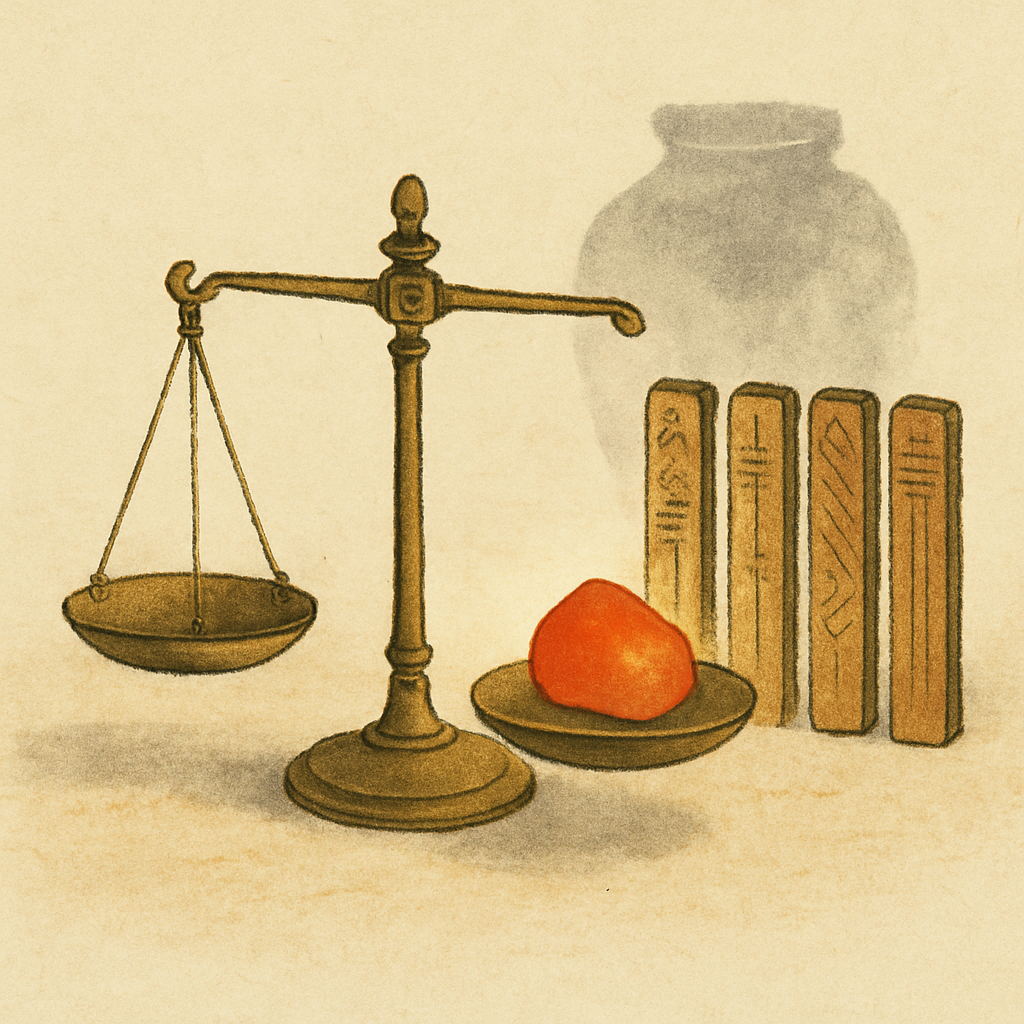
Same hours, same effort, yet one person's savings grow while another's quietly drain away. Bad luck? Personality? In Saju (Korean Four Pillars astrology), this difference is read as the size and structure of your money vessel. The key question is not simply whether wealth stars appear in your chart, but how much of that wealth your chart can actually hold. Today we unpack what a genuinely strong wealth chart really looks like.
The Concerns People Bring to a Reading
Not long ago, a man in his early forties who runs his own business came in for a consultation. He told me his revenue had been rising steadily, yet his bank balance never seemed to move. The phrase that stuck with me was: "I know I'm earning, but nothing is adding up."
A woman in her late thirties, a salaried professional, came in with a similar story. Her income was above average for her age group, yet she had never managed to save a meaningful lump sum. She had no memory of spending it, and genuinely could not say where the money had gone.
Both of them had Jaeseong (the wealth stars) in their charts. But the structures were different. Having wealth stars and having good wealth luck are two separate things. Let's go through that difference step by step.
Earning Power and Accumulating Power Come from Different Places
In a Saju chart, the element most directly linked to money is the Jaeseong (wealth star). Wealth stars come in two forms: Jeongjae (steady wealth) and Pyeonjae (variable wealth). Jeongjae resembles fixed income, the kind of regular, predictable flow you see with a salary. Pyeonjae resembles variable income, the kind of up-and-down flow associated with business or investment.
Wealth stars alone, however, do not tell the whole story of earning power. What generates wealth stars is Siksang (the output element), which encompasses Sikshin (resourceful output) and Sanggwan (expressive output). Siksang represents talent, skill, and the ability to communicate and produce. When Siksang feeds into and produces wealth stars, money can begin to flow.
Siksang Saengjae: The Basic Circuit for Earning
The structure in which Siksang produces wealth stars is called Siksang Saengjae. Simply put, it means the circuit connecting your talents and efforts to actual income is wired up inside your chart. Without this circuit, you may work hard yet find that your effort converts into money less efficiently than you would expect.
- Siksang present and wealth stars present: earning power exists and the channel for money is open
- Siksang present but no wealth stars: talent is there, but monetizing it may not come easily
- Wealth stars present but no Siksang: a channel for money exists, but it may not sustain itself over time
To sum up: earning power flows from Siksang, the channel for money comes from wealth stars, and both need to be connected for income to run steadily.
What "Good Wealth Luck" Actually Means
Earning a lot does not automatically mean good wealth luck. This is the point most often misunderstood in readings. In Saju, wealth luck is assessed by looking at both earning and keeping.
Even when wealth stars are strong, if the day master (the pillar representing the self) lacks the strength to carry them, the chart can fall into what is called Jaedasinyak (wealth overwhelming a weak self). In that state, money can bring pressure rather than security. On the other hand, when the day master is strong and wealth stars are kept in reasonable proportion, a structure can form where savings grow steadily even on a modest income.
When Sajagung looks at wealth luck, the first thing we check is this carrying capacity. We look at the structure of the vessel before we look at the numbers inside it.
- Earning a lot: read from the strength of the connection between Siksang and wealth stars
- Keeping well: read from the balance between the day master's strength and the wealth stars
- Growing over time: read from the relationship between wealth stars and Gwanseong (authority stars), and the direction of incoming luck cycles
To sum up: a chart with strong wealth luck is not one built to earn the most. It is one where earning power and holding power are in balance.
How the Money Vessel Changes with a Strong or Weak Day Master
The size of the money vessel is judged differently depending on whether the chart is Singang (a strong day master) or Sinyak (a weak day master). Singang means the day master's energy is robust; Sinyak means it is comparatively thin.
Wealth Patterns in a Strong Day Master Chart
When the day master is strong, there is real capacity to reach for and hold wealth. If wealth stars serve as the Yongsin (the favorable element), the flow of money can actually stabilize the day master rather than strain it. Fields with higher variability, such as entrepreneurship, investment-related work, or sales, may offer relatively open pathways to income.
Wealth Patterns in a Weak Day Master Chart
When the day master is weak, wealth stars are more likely to act as a Gisin (the unfavorable element). Money coming in may tend to bring equal or greater demands in the form of spending, debt, or responsibility. In this case, rather than pushing hard to grow wealth, the pattern often shows that financial stability tends to follow naturally when a luck cycle arrives that strengthens the day master first.
- Strong day master with wealth stars as favorable element: a large vessel with a wide carrying range
- Weak day master with wealth stars as unfavorable element: spending pressure often arrives before income feels secure
- Weak day master with Bigeop (peer and competitor element) as favorable element: a pattern where wealth tends to flow better through collaboration or partnership
To sum up: the size of the money vessel is determined not by the quantity of wealth stars but by how much of that wealth the day master can actually carry.
Charts Where Money Tends to Leak: Patterns Worth Knowing
Among clients who earn well yet see nothing accumulate, certain chart patterns appear with some regularity. It would be an overstatement to say these patterns are definitive, but when several of them overlap, the tendency tends to be stronger.
- Wealth stars receiving a Chung (clash): the channel through which money arrives is prone to disruption
- Excess Bigeop (peer elements) with weak wealth stars: money tends to scatter through competition, division, or sharing
- Wealth stars falling in a Gongmang (void) position: money can feel close yet keep slipping away
- No Siksang with a dominant Geopjae (competitor element): the route for earning tends to be blocked while the route for leaking stays open
Seeing these patterns does not mean wealth luck is absent. How the Daeun (ten-year luck cycle) unfolds, and which Seun (annual luck cycle) aligns with it, can change the flow considerably. Knowing the structure means you can prepare for what is coming.
To sum up: understanding where the leaks are is the first step. Once you know the structure, you can find a direction to work with it.
When a Saju Reading Actually Helps
When financial flow feels stuck, or when the sense that you earn but nothing sticks keeps repeating, a Saju reading can serve as a useful reference map. Knowing the structure of your own money vessel helps you get a feel for which approach to income generation fits your chart's nature.
The point is not to use Saju to time a trade or pick an asset. What Sajagung encourages is understanding what kind of wealth structure you carry, then aligning that understanding with the direction your luck cycles are moving.
A wealth reading that maps out the relationship between your wealth stars and output stars, assesses whether your day master leans strong or weak, and identifies the direction of your favorable and unfavorable elements all in one place can be a good place to start. Structure comes before numbers.
Knowing the size and shape of your vessel matters more than knowing how to earn more. That is where a wealth reading begins.