Concept
Ilchin and Sijin: How to Read Today's Fortune in Two Layers
You've probably heard someone say 'the ilchin is good today.' But have you ever noticed how the same day can feel smooth in the morning and oddly stuck by the afternoon? That shift is exactly what sijin helps explain. When you read ilchin and sijin together, the texture of your day comes into much sharper focus.
Ilchin and Sijin: Why Do You Need Both?
In Saju (Korean Four Pillars astrology), time is organized into four pillars: the year pillar, month pillar, day pillar, and hour pillar. When people talk about 'today's fortune,' the reference point is the day pillar, the two characters that represent the whole day.
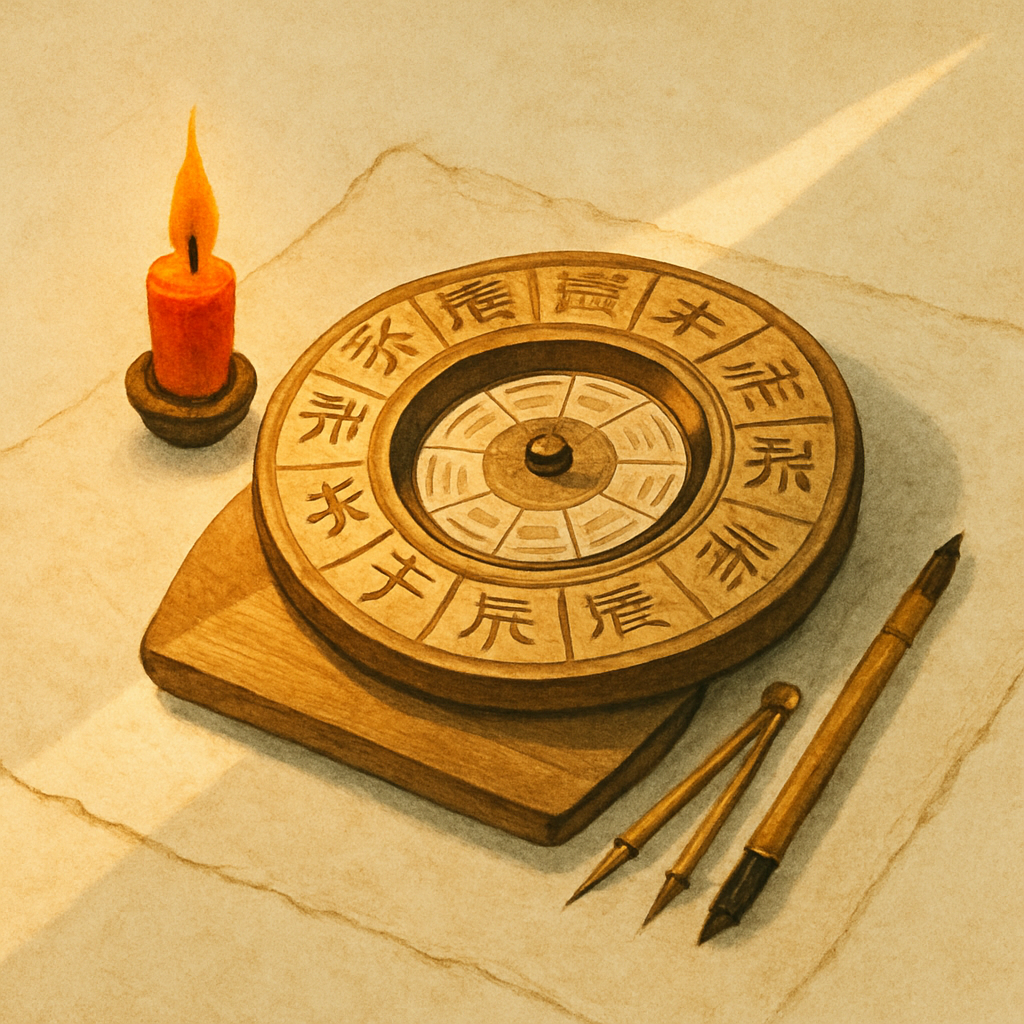
A day, though, is twenty-four hours long. The idea that energy can shift within those hours is where sijin (the two-hour time segments) comes in. If ilchin is the broad grain of the day, sijin is that same day divided into finer two-hour intervals, each with its own subtle texture.
Think of ilchin as a full-day weather forecast, and sijin as an hour-by-hour temperature chart.
Ilchin: The Overall Flow of Your Day
Ilchin looks at how today's two day-pillar characters interact with your personal Saju chart. When today's day pillar aligns well with your yongsin (the favorable element), people say 'the ilchin is good.' When it clashes with your gisin (the unfavorable element), they say the day feels off.
Ilchin is in effect all day long. The energy it sets in motion in the morning runs like background music through every hour that follows. That's why, for things where the overall atmosphere matters, like an important meeting or signing a contract, ilchin is the first thing to check.
- The heavenly stem and earthly branch of the day pillar are the core unit.
- How those characters relate to your own day pillar, yongsin, and gisin shapes the day's general outlook.
- Ilchin acts as the background energy running beneath the entire day.
- Whether stems combine or branches clash has a strong effect on how ilchin is interpreted.
Sijin: The Finer Grain That Shifts Every Two Hours
In traditional fortune-telling, a day is divided by the twelve earthly branches: Jasi, Chuksi, Insi, and so on, each covering two hours, giving twelve segments that make up the full day. These segments are what we call sijin.
Sijin works within the larger picture that ilchin sets. Even on a day where ilchin feels unremarkable or slightly difficult, a particular sijin that harmonizes well with your personal chart may open a window of smoother energy during those specific hours.
The reverse is also true. A favorable ilchin doesn't guarantee every hour will feel easy. If a particular sijin clashes with your gisin, moving a little more carefully during those two hours can be worth considering. Dividing a day into two-hour slices is a more nuanced lens than it might first appear.
How to Use Ilchin and Sijin Together
For an ordinary day, reading ilchin alone is usually enough. When something important is on the schedule, though, adding sijin to the picture gives you a much more precise read.
Situations where checking sijin is especially useful
- When you need to choose a specific time to sign a contract or other important document
- When a single time slot decides the outcome, such as a job interview or a presentation
- When planning a departure time for travel or a moving day
- When several appointments fall on the same day and you need to prioritize
For example, if you have a contract meeting at 3 p.m., that window falls within Misi (the Goat hour, 1 to 3 p.m. in traditional reckoning). Looking at how Misi's branch interacts with your personal chart, alongside ilchin, can give you a clearer sense of how that meeting may unfold.
Why Free Daily Fortune Readings Usually Leave Out Sijin
Most free daily fortune services cover ilchin, the overall energy of the day, and stop there. Factoring in sijin requires mapping every two-hour branch against your full personal chart, which isn't something a simple lookup can easily handle.
That's why Today's Fortune focuses first on the ilchin-based flow. Checking how the day's stem-and-branch pair meets your own day pillar is a solid starting point before going deeper.
Sijin is the next layer. Picture ilchin as a large map of the city and sijin as the street-level directions. Once you hold them that way, the two concepts naturally settle into place.
The Pleasure of Reading a Day One Layer at a Time
Ilchin and sijin aren't complicated or intimidating ideas. They're simply two different scales for looking at the same day: a wide frame and a close one. Start with the overall flow (ilchin), then zoom into any time slot that matters to you (sijin). Read together, the two layers can give you a much richer sense of how your day may move.
Curious about how today is shaping up? Start with the ilchin-based Today's Fortune reading. Sajagung will walk you through how your day pillar meets today's stem and branch, one step at a time.
Read a day in two layers, and today starts to come into focus.