Concept
Dohwasal in Your Chart: A Star of Charm, Not Fickleness
When people first hear the word Dohwasal, many flinch a little. The word carries the weight of something ominous, or the stigma of a wandering eye. But when you look closely at what Dohwasal actually means, it is closer to the living, breathing charm of peach blossoms in spring, the kind of energy that naturally draws people in. Let's look at both the misunderstanding and the truth.
What Brought You Here
Not long ago, a woman in her early thirties came in for a reading. She said: 'A fortune teller told me I had Dohwasal, and I was honestly shaken. Was she saying I take relationships lightly?' In reality, this woman had loved one person deeply and faithfully for years.
Another client, a man in his mid-forties, shared a different worry: 'I told a friend he had Dohwasal and he seemed hurt by it.' The word sal, meaning a kind of afflicting force, carries a heavy sound in Korean, and that weight alone makes Dohwasal one of the most misunderstood terms in Saju (Korean Four Pillars astrology).
Dohwasal is not a flaw. It is a temperament. What it blossoms into depends entirely on the environment it meets.
What Dohwasal Is: The Energy of Ja, O, Myo, and Yu
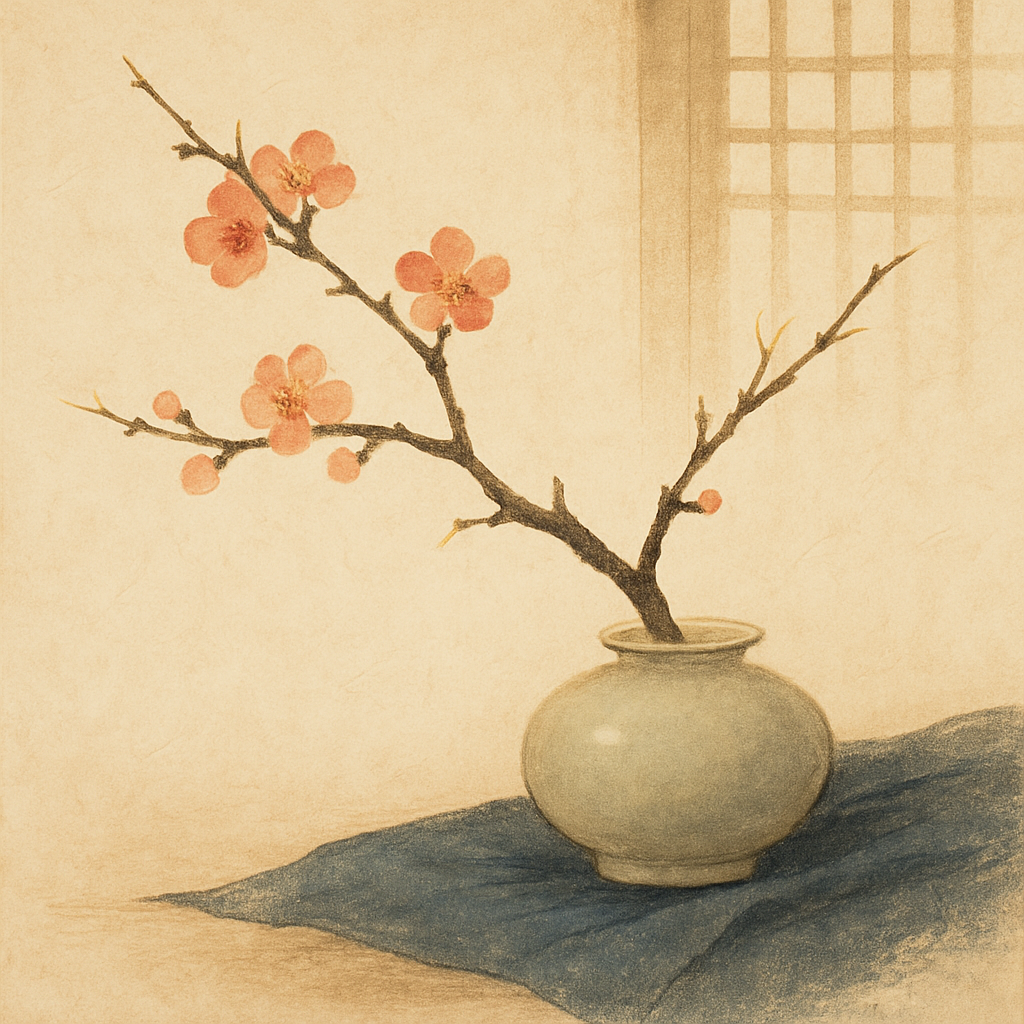
Dohwasal (桃花殺, the Peach Blossom Star) is a special marker in Saju that appears when one of four earthly branch characters, Ja, O, Myo, or Yu, falls in a particular position in the chart, such as the day branch or year branch. The character for peach blossom, Do (桃), says it all: the original image is a flower blooming brightly and holding the gaze of everyone who passes by.
How to Identify Dohwasal
- If your birth year branch is Shin, Ja, or Jin, Dohwasal appears when Yu is elsewhere in your chart.
- If your birth year branch is In, O, or Sul, Dohwasal appears when Myo is elsewhere in your chart.
- If your birth year branch is Hae, Myo, or Mi, Dohwasal appears when Ja is elsewhere in your chart.
- If your birth year branch is Sa, Yu, or Chuk, Dohwasal appears when O is elsewhere in your chart.
Ja, O, Myo, and Yu are known as the four cardinal peak branches. Each sits at the very center of one of the four directions and holds the most concentrated form of its element: Water, Fire, Wood, and Metal respectively, within the Five Elements (오행, Ohaeng). Because these branches carry such strong, visible energy, they naturally catch the attention of those around them.
Where Did the 'Wandering Eye' Stigma Come From?
The link between Dohwasal and romantic restlessness has a long history. In older societies, being noticed by many people and drawing the interest of the opposite sex was seen as a dangerous quality, especially for women. That cultural bias was absorbed directly into how the star was interpreted, and it has lingered ever since.
In practice, Dohwasal is not a sign of chasing after others. It points to someone who expresses themselves freely, brightens the mood of a room, and puts even strangers at ease. When this energy becomes very intense or runs up against unfavorable elements in the chart (called gisin, the obstructing force), it can read as scattered or emotionally volatile. But that is a question of overall chart balance, not something Dohwasal causes on its own.
Think of a wide-open window. It lets in fresh air and warm light beautifully, but on a stormy day rain can blow in too. The window is not the problem. What matters is its relationship to the weather. Dohwasal works the same way: how it interacts with the rest of the chart matters far more than the star itself.
Dohwasal Reinterpreted Today: Charm, Popularity, and Artistic Sensitivity
In contemporary Saju practice, Dohwasal is broadly understood as an energy of personal magnetism, social warmth, and artistic sensibility. In fields that involve moving people's hearts or working with beauty, it can be a genuine strength.
Fields Where Dohwasal Can Shine
- Arts and entertainment: performers, musicians, and content creators who thrive in front of an audience.
- Service and counseling: roles where making people feel comfortable and understood is the core skill.
- Beauty and fashion: work that involves creating beauty and communicating a sense of style.
- Education and public speaking: the presence and charisma that keeps an audience genuinely engaged.
- Sales and marketing: the ability to build rapport quickly and leave a good impression.
When it comes to romance, people with Dohwasal in their chart often find that they are noticed easily and may receive confessions of interest more than most. If you are curious about how your romance fortune connects to Dohwasal, reading it alongside the full chart context will give you a much clearer picture.
When Dohwasal Flows Well, and When to Pay Attention
There are conditions under which Dohwasal tends to express itself in positive ways. The clearest is when the day master is strong and the chart as a whole is well-balanced. When the Dohwasal energy flows harmoniously through the chart, like a spring breeze through budding trees, it often surfaces as genuine charm and social ease.
Conditions That Support a Positive Flow
- When Dohwasal shares the same element as the yongsin (the favorable element) or supports it.
- When the governing stars (Jeonggwan or Pyeongwan) are stable and provide a grounding center.
- When the Dohwasal branch is reinforced through combination (合, hap) during a major or annual cycle.
Flows Worth Watching
- When Dohwasal falls under the gisin (obstructing element) and is disrupted by a clash (沖, chung) in a major cycle.
- When Dohwasal appears in both the day and hour branches, making the overall chart energy feel scattered.
- When the governing stars are absent or very weak, making it harder to find emotional steadiness.
Even so, no single special star can define the full pattern of someone's relationships. Dohwasal is closer to one note in the larger score of a Saju chart. Whether that note creates harmony or tension can only be heard properly in relation to all the other notes around it.
Your Chart Is a Compass, Not a Label
Before the woman in her early thirties left that first session, I said this to her: 'Dohwasal means you were born with a natural pull that draws people toward you. What you do with that is entirely your own choice.'
Being magnetic carries responsibility. When you understand this energy in yourself and choose a direction for it, Dohwasal stops being a symbol of restlessness and becomes something that may help bring a meaningful connection into your life. In seasonal terms, it is less like cherry blossoms that flare up brilliantly and scatter, and more like the peach blossom that holds its fragrance a little longer.
Having Dohwasal means the door is wide open. What walks through it is not decided by your chart. It is decided by you.
If you are curious about your current romantic period, or want to explore how Dohwasal is actually working within your specific chart, a romance fortune reading can help you see the full picture. Beyond interpreting a single star, it is about finding the kind of connection that suits you at this particular point in your life.