Practical
Digital Talismans: The New Custom of Keeping One on Your Lock Screen
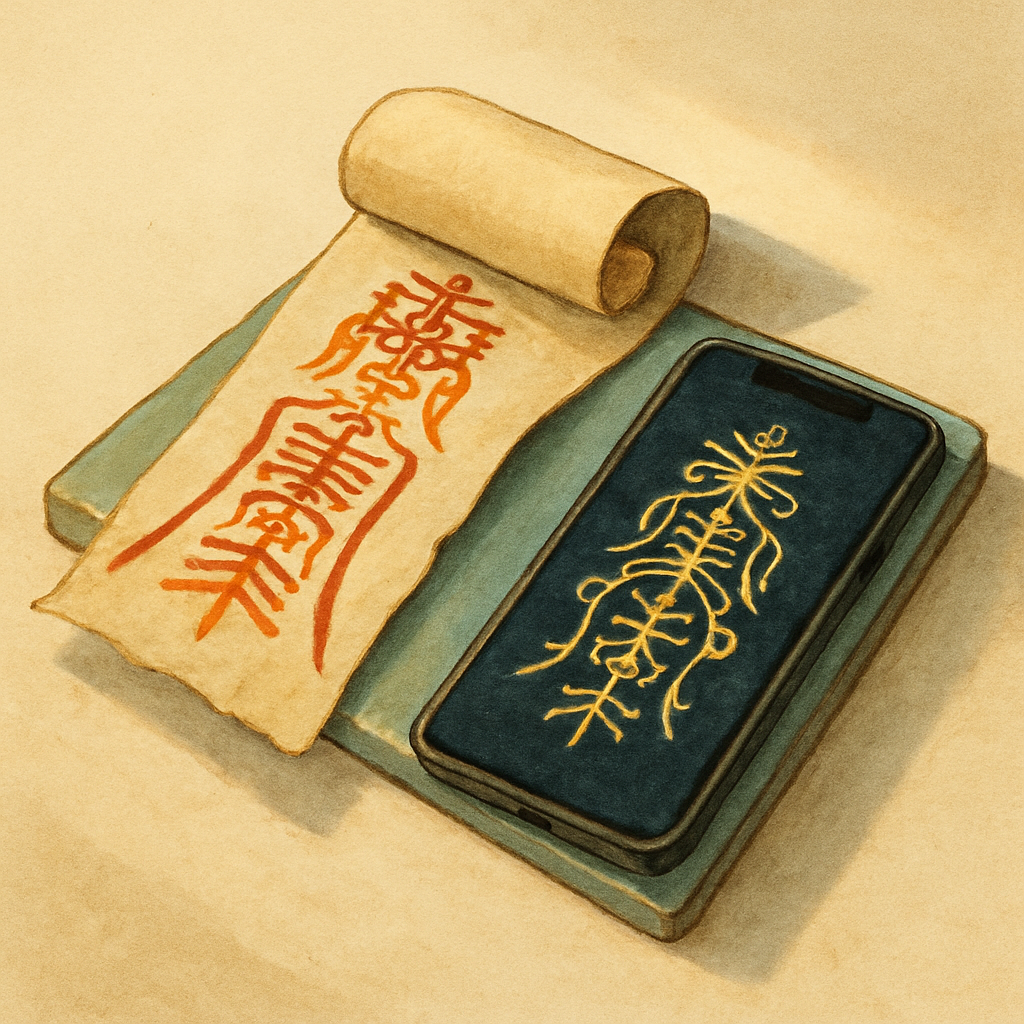
The average person unlocks their smartphone more than a hundred times a day. Place a talisman on that first screen, and you can expect to check in with its energy every single day without setting aside any special time for it. The old habit of tucking a paper talisman into your wallet has simply moved onto the screen. That shift is where the digital talisman begins.
Why Did the Digital Talisman Come About?
A bujeo (符籍, Korean talisman) was originally a ritual tool: symbols and characters written in ink or cinnabar on paper, to be carried on the body or posted in a space. It was designed to compress the energies of the five phases (Wood, Fire, Earth, Metal, Water) and the power of protective spirits into a visual form, so the person using it could keep that energy close at all times.
In modern life, the one thing people truly keep close at all times is, without question, the smartphone. We hold it more often than our wallets and longer than any business card. If the core principle of a talisman is "sustained visual contact creates an energy connection," then the lock screen is the most sensible place to keep one in this day and age.
Traditional folk practice already chose talisman placement according to where people actually moved: door frames, room entrances, the lining of a coat. The lock screen talisman applies exactly the same principle to a digital environment. This is not a new superstition. It is an old principle in a new form.
In short: the digital talisman is what happens when the traditional rule of "keep it where you look most" is applied to the smartphone.
Lock Screen or Home Screen: Where Should It Go?
The lock screen and the home screen serve different purposes. Placing your talisman with that distinction in mind lets you use it more intentionally.
Lock Screen: The First Energy of the Day
The lock screen is the first thing you see every time you wake your phone. You see it when you silence your morning alarm and again when you reach for your phone out of habit after a meal. It is the right place for talismans oriented toward protection, health, and everyday peace of mind.
Home Screen: Purpose and Intention
The home screen is a space you open actively, in order to do something. Placing a talisman here that speaks to a specific goal, such as passing an exam, earning a promotion, or growing a business, can serve as a reminder of your intention every time you open an app.
- Lock screen: symbols related to protection, health, and household harmony
- Home screen: symbols oriented toward goals such as exams, employment, prosperity, or meaningful relationships
- Using the same talisman on both screens is perfectly fine
In short: the basic principle is protection on the lock screen, goal-oriented energy on the home screen.
How Is It Different from a Paper Talisman?
The heart of a paper talisman lies in the ritual of making it and in the physical material itself. Traditional practice held that the ink, cinnabar, and yellow clay used in its creation act as vessels that actually hold energy. This is a clear distinction from a digital talisman.
The strengths of a digital talisman, by contrast, lie in frequency of contact and ease of upkeep. A paper talisman buried deep in your wallet may go unseen for days at a time, while a lock screen talisman naturally catches your eye dozens of times a day.
The two approaches are not in opposition. You can post a paper talisman on the door frame at home and carry that energy with you through the day via your lock screen. When you order a personalized talisman (single piece), simply ask for a digital image file at the same time, and you can manage both channels together.
In short: paper talismans draw their strength from physical material and ritual; digital talismans draw theirs from frequency and accessibility.
How to Choose Colors and Symbols
The colors used in a talisman connect directly to the five phases. The basic principle is to choose a background color and symbol color based on the kind of energy you are seeking.
- Wood energy (growth, new beginnings, health): blue and green tones
- Fire energy (passion, honor, popularity): red and orange tones
- Earth energy (stability, grounding, trust): yellow and brown tones
- Metal energy (prosperity, decisiveness, harvest): white and gold tones
- Water energy (wisdom, communication, adaptability): black and dark navy tones
The right symbols depend on your purpose. Personalized symbols based on your name or birth date are most effective when they are designed to reinforce the yongsin (用神, the favorable element) identified in your individual Saju (Korean Four Pillars astrology) chart. Choosing symbols through a Saju reading tends to produce better results than simply using a generic design.
Most smartphone screens use a portrait aspect ratio, roughly 9:19.5. Designing the talisman so the main symbol sits centered with generous margins tends to feel more settled, both visually and symbolically.
In short: choose a color from the five phases that matches the energy you want, then place the appropriate symbol on top, guided by your yongsin.
What It Means as a Daily Visual Practice
In traditional Korean fortune-telling, reinforcing your energy is understood to happen not through a single grand ritual but through repeated, everyday contact. Lighting incense at the same hour each day or reading a passage of scripture are classic examples of this.
A lock screen talisman weaves that repeated contact naturally into your existing smartphone habits. Without setting aside any special time, your gaze meets that energy every time you wake the screen. This is why the digital talisman is sometimes called a visual prescription.
You do not need to gaze at it consciously. That said, adding the small habit of taking a moment to look at the symbol on your screen during the three seconds it takes to turn off your morning alarm is said to make the effect more tangible.
- First glance of the morning: check in with the day's energy
- Last glance before sleep: settle and close out the day
- A brief look before a stressful event: focus and calm
In short: the lock screen talisman is a visual practice built into the rhythm of daily life through repeated contact.
The Practical Advantage of Easy Storage and Renewal, and How to Get Started
A paper talisman that has been damaged should be properly burned or otherwise disposed of. If it goes through the wash or is worn down by moisture, replacing it takes real effort. A digital talisman is a file, so it cannot be damaged, and updating it is as simple as swapping out an image.
The right time to replace a talisman is typically when a phase of life shifts: the new year (by the traditional lunar calendar), moving to a new home, starting a new job, or passing an exam. When a goal is reached, the practice is to delete the talisman with a quiet word of thanks and replace it with one suited to the next chapter. This aligns with the traditional way of handling paper talismans.
When starting out, it helps to begin with a Saju reading to understand where your energy currently stands and which of the five phases may need reinforcing. From there, choosing the right color, symbol, and intention becomes much clearer.
- Step 1: Identify your current yongsin (favorable element) and gisin (忌神, unfavorable element) through a Saju reading
- Step 2: Decide on the color and symbol that address the five-phase element and purpose you want to reinforce
- Step 3: Have your digital talisman made or receive it
- Step 4: Set it as your lock screen or home screen
- Step 5: Renew it when a new phase of life begins
Sajagung offers a personalized talisman (single piece) with color, symbols, and intention all designed around your individual Saju chart. It is delivered as a digital file ready to set on your lock screen, so you can start filling your screen with your own energy today.
In short: easy to create, store, and renew, the digital talisman is the most practical way to bring traditional principles into everyday life.