Concept
How to Read Dangsaju: What Makes It Different from Saju
If you have ever unfolded a well-thumbed dangsaju chart tucked between the pages of an old almanac, you probably remember that feeling: something surprisingly simple, yet strangely on the mark. Dangsaju reads a person's broad life current not by laying out all eight characters of a full Four Pillars chart, but simply from the zodiac sign of the birth year, the lunar birth month, and the lunar birth day. Today we take a careful look at what dangsaju actually is, and where it parts ways with the saju most of us are already familiar with.
What Is Dangsaju: A Folk Tradition That Has Endured
The name dangsaju (唐四柱) is said to come from a system of divination that arrived from Tang Dynasty China. Where the saju of modern Korean astrology traces elaborate interactions between the heavenly stems and earthly branches, dangsaju takes a far simpler and more intuitive starting point.
It works from three pieces of information: the zodiac sign of the birth year (the year branch), the lunar birth month, and the lunar birth day. Each of these is matched against a fixed reference chart and assigned to one of the twelve stars (sipijseong), and the character and fortune associated with those stars are then interpreted. That is the core structure of dangsaju.
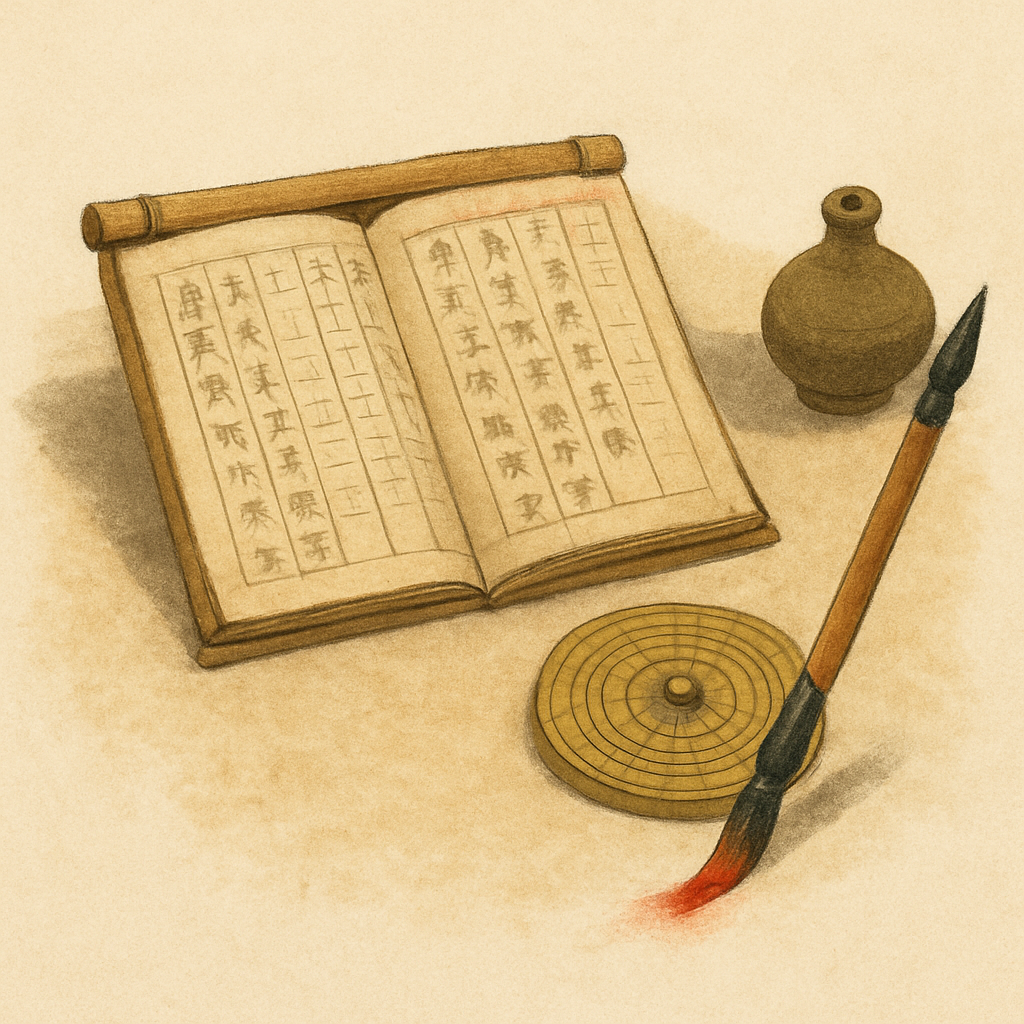
The thin, dog-eared booklet a village fortune-teller used to pull from her shelf was a dangsaju reference chart. Because anyone could find their own stars without complicated calculations, this approach has been warmly embraced by ordinary people for a very long time.
Mapping the Twelve Stars: Finding Three Stars from Year, Month, and Day
The twelve stars in dangsaju carry names such as Jami, Cheongi, Taeyang, Mugok, Cheondong, Yeomjeong, Cheonbu, Taeum, Tamrang, Geomun, Cheonsang, and Cheonryang. Each star represents a distinct character type, vocational tendency, and relational quality. No single star is simply good or bad; each points to the particular direction of energy a person carries.
How the matching works
- Zodiac birth year: the earthly branch of the birth year determines the first star.
- Lunar birth month: the month is looked up in the reference chart to find the second star.
- Lunar birth day: the day is looked up in the same way to confirm the third star.
The combination formed by these three stars is where a dangsaju reading begins. Even people born in the same zodiac year can end up with a completely different set of stars depending on the month and day, and each combination opens its own unique story. Think of flowers blooming in the same season: the same variety planted in different soil and light produces different colors and scents.
The Key Difference from Saju: A Different Center of Gravity
Saju lays out all four pillars, the year, month, day, and hour, and their eight characters, then places the day stem (ilgan, the heavenly stem of the birth day) at the center as the self. The remaining seven characters are analyzed in precise detail through the ten gods (sipsin) and through relationships such as harmony, clash, and punishment.
Dangsaju takes a different axis: the year branch, the zodiac sign of the birth year, is the anchor. Where ilgan-centered saju examines the inner structure of a person and the complex web of relationships around them, dangsaju takes a wider view, sketching the broad contours of a life from the great energy of the birth year outward.
If saju reads every individual note on the score, dangsaju listens first for the overall mood and key of the piece.
The two approaches are not in conflict. They simply focus at different distances and with different levels of detail. When precise analysis is called for, saju tends to be more useful; when you want an intuitive sense of a life's broad current and natural temperament, dangsaju can be the better tool.
Reading the Flow of Early, Mid, and Later Life
In dangsaju, the combination of assigned stars has traditionally been read across three periods of life: the early years, the middle years, and the later years. The idea is to see which star operates most strongly in which phase, and to catch a broad sense of when shifts in energy may occur.
Reading the flow by life period
- Early years: the star from the zodiac birth year tends to carry the most influence here, reflecting the family environment and the temperamental soil of childhood.
- Middle years: the star from the lunar birth month speaks to the patterns of social activity and relationships during the active working phase of life.
- Later years: the star from the lunar birth day points to the quality of stability and the texture of life's closing chapter.
The boundaries between these three periods are not sharp lines. Just as seasons do not change overnight, the currents of fortune shift gradually and overlap. That is why, when reading dangsaju, it matters more to look at how the three stars relate and harmonize as a whole than to fix attention on any single star in isolation.
Dangsaju and Saju: Complement, Not Competition
The question people most often ask when they first encounter dangsaju is: if my dangsaju and my saju seem to say different things, which one should I trust? The question itself comes from seeing the two as rivals.
They are simply two different lenses looking at the same person. Saju examines inner structure and the dynamics of relationships in fine detail; dangsaju surveys the broad direction of a person's innate energy and the rhythm of different life phases. In photographic terms, saju is a close-up taken with a macro lens, while dangsaju is a wide-angle landscape.
When both perspectives are brought together, the terrain of a person's life emerges with more depth and dimension. Neither is right and the other wrong; each serves its own purpose in its own way. If you are curious about saju, you can explore a saju reading; if you want to explore dangsaju, take a look at dangsaju.
Closing Thoughts: Old Wisdom in Something Simple
Dangsaju has survived for hundreds of years in everyday life precisely because it is accessible to anyone without complicated calculations. That simplicity is its genuine strength. Sketching the broad outline of a person's life from just three pieces of information, the birth year, month, and day, is the reason this approach has stayed close to people's hearts for so long.
Dangsaju shines most when it is used not to fix fate in place, but as a tool for stepping back and seeing the flow of your own life from a wider vantage point. Think of standing in an autumn field, quietly taking in the distant ridge of mountains. It can offer that kind of unhurried perspective on the larger shape of things.
Try dangsaju now to discover your own star combination and the currents running through your life. Sajagung is here to bring old wisdom into today's language, one careful step at a time.