Concept
The 12 Stars of Dang Saju: How Twelve Stars Shape Your Early, Middle, and Later Years
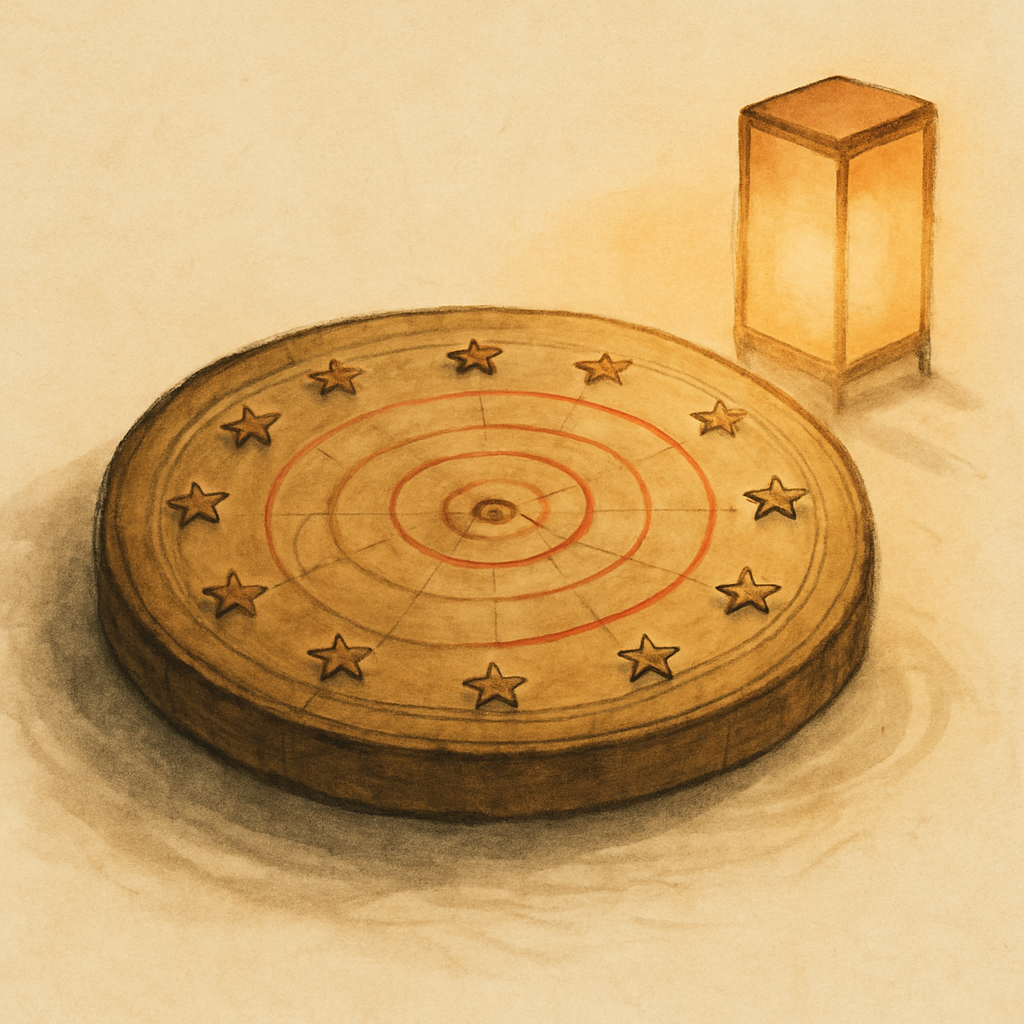
Dang Saju (Tang Four Pillars fortune-telling) begins with the earthly branch of your birth year and arranges twelve stars in sequence, then observes where each star falls across the stages of your life. This system follows its own distinct path, separate from classical Four Pillars astrology. Rather than measuring the strength of fortune, it focuses on reading the texture and character of each life period.
What Are the 12 Stars of Dang Saju?
Dang Saju (唐四柱, Tang Four Pillars) is a folk fortune-telling tradition said to have originated from Tang dynasty Chinese divination practices. Where classical Four Pillars astrology carefully analyzes all eight characters of a chart, Dang Saju takes a simpler approach, compressing the four pillars of year, month, day, and hour into pictorial symbols and twelve stars.
At the heart of this system are the 12 stars: Cheongwi, Cheonaek, Cheonkwon, Cheonpa, Cheonga, Cheonmun, Cheonbok, Cheonyeok, Cheongo, Cheonin, Cheonye, and Cheonsu. Each star carries its own distinct quality and represents a particular facet of a person's life journey.
The 12 stars are not simply a table of good and bad omens. Each star is better understood as a pointer, indicating which quality or texture is likely to come to the surface during a given period. The same star can carry different weight depending on which pillar it occupies.
Calculating from the Year Branch: How the Stars Are Placed
To arrange the 12 stars, the first thing you need is the earthly branch of your birth year, known as the year branch. Traditional practice assigns a starting star based on this branch: if your year branch is Ja, O, Myo, or Yu, the sequence begins with Cheongwi; if it is In, Sin, Sa, or Hae, it begins with Cheonmun; and if it is Jin, Sul, Chuk, or Mi, it begins with Cheonbok.
That starting star is placed in the year pillar position, and the remaining stars are assigned in order to the month, day, and hour pillars. The star sitting in each pillar connects to the area of life that pillar represents: family background and early circumstances, the middle-years environment, daily life, and inner character.
The exact method of calculation can vary slightly between sources. If you want to work from the traditional Dang Saju framework accurately, it is worth checking which original text a given method is based on.
The Character of Each Star: What Each One Points To
Each of the twelve stars holds a different quality. Here is a brief overview of what each star tends to point toward.
- Cheongwi (天貴, noble benefactor): The energy of support and recognition. This star often points to a period when help may arrive or others are likely to acknowledge your efforts.
- Cheonaek (天厄, heavenly hardship): A texture of obstruction and difficulty. This star can indicate a period when physical health, vitality, or outside pressures may become more prominent.
- Cheonkwon (天權, heavenly authority): Authority and initiative. This star may signal a time when you tend to take a central role or find responsibilities growing.
- Cheonpa (天破, heavenly dispersal): The energy of scattering. Plans may shift, and movement or change can become more frequent during this period.
- Cheonga (天奸, heavenly cunning): Perceptiveness and strategy. This star points to a texture in which reading people and thinking tactically in relationships becomes important.
- Cheonmun (天文, heavenly learning): The energy of scholarship, writing, and the arts. This star often marks a time well suited to learning and creative expression.
- Cheonbok (天福, heavenly blessing): The energy of good fortune. Stability, ease, and unexpected benefits may come more readily during this period.
- Cheonyeok (天驛, heavenly movement): A texture of travel and change. Career, home, or surroundings may shift more frequently during this star's period.
- Cheongo (天孤, heavenly solitude): Solitude and independence. This star can indicate a period when you may often find yourself making decisions and carrying things on your own.
- Cheonin (天刃, heavenly blade): Sharpness and competition. This star may signal a time when conflict, rivalry, or heightened tension is more likely.
- Cheonye (天藝, heavenly talent): Skill and artistry. Natural talent in crafts, the arts, or technical work may have a chance to shine during this period.
- Cheonsu (天壽, heavenly longevity): Continuity and endurance. This star tends to bring a texture of things settling in and lasting over the long term.
Early, Middle, and Later Years: Which Star Fills Which Period?
Among the four pillars of Dang Saju, the year pillar represents early life (roughly from birth through the mid-twenties), the month pillar represents the early middle years (late twenties through the forties), the day pillar covers the mid-to-late middle years (forties through sixties), and the hour pillar represents the later years (from the sixties onward).
For example, if Cheonaek appears in the year pillar, there may be a tendency toward health challenges or environmental constraints during early life. If Cheonbok falls in the hour pillar, the later years may carry a quality of stability and ease.
That said, the 12 stars are not a tool for declaring fixed outcomes of good or bad fortune. Even the same Cheonaek star reads differently depending on what stars occupy the other pillars. The meaning only comes fully alive when all four pillars are read together.
Dang Saju is a map of inborn tendencies, not a fixed script. Regardless of which star appears in any given period, the preparations and choices you make during that time are what give your life its actual shape.
How Does This Differ from Classical Four Pillars Astrology?
Classical Four Pillars astrology works through layered analysis: the yin-yang and five-element interactions of heavenly stems and earthly branches, the ten-deity relationships, and the flow of major and annual cycles. It requires substantial specialist knowledge and can reach considerable depth.
The 12 stars of Dang Saju use a much simpler structure. Starting from a single year branch and assigning twelve stars in sequence is enough to establish the basic framework. This is why the tradition was widely used in everyday folk culture as a quick, intuitive way to get a sense of life's broad currents.
The two systems are not in competition. If classical Four Pillars is a detailed topographical map, Dang Saju is more like an aerial view of the major ridgelines of a life. Used with an awareness of their different purposes, the two can complement each other well.
How to Make Use of the Dang Saju 12 Stars
The most practical use of the Dang Saju 12 stars is checking in on a simple question: what kind of period am I passing through right now? If you are in the early middle years, you might look at which star sits in your month pillar and use its qualities as a reference point for finding your bearings.
What matters most is not getting too attached to a star's name. Cheongo appearing in your chart does not make solitude a fixed destiny. It is more fitting to read it as a signal that situations requiring independent judgment and self-reliance may come up more often during that period.
If you would like to explore a full Dang Saju reading including the 12 stars, the Dang Saju page offers a more in-depth look. Sajagung walks you through how each of the twelve stars takes its place across the four pillars, in a calm and grounded way.