Practical
2027: The Year of the Red Goat and Its Energy
2027 is the year of Jeong-hwa (丁火, the yin fire stem) paired with Mi-to (未土, the yin earth branch), forming what is known in the sixty-year cycle of ganjji (Korean stem-branch calendar) as the fourteenth combination. It is commonly called the Year of the Red Goat. The delicate flame of fire and the deep, steady earth come together in a quietly compelling way. Sajagung is here to walk you through what possibilities this year may hold.
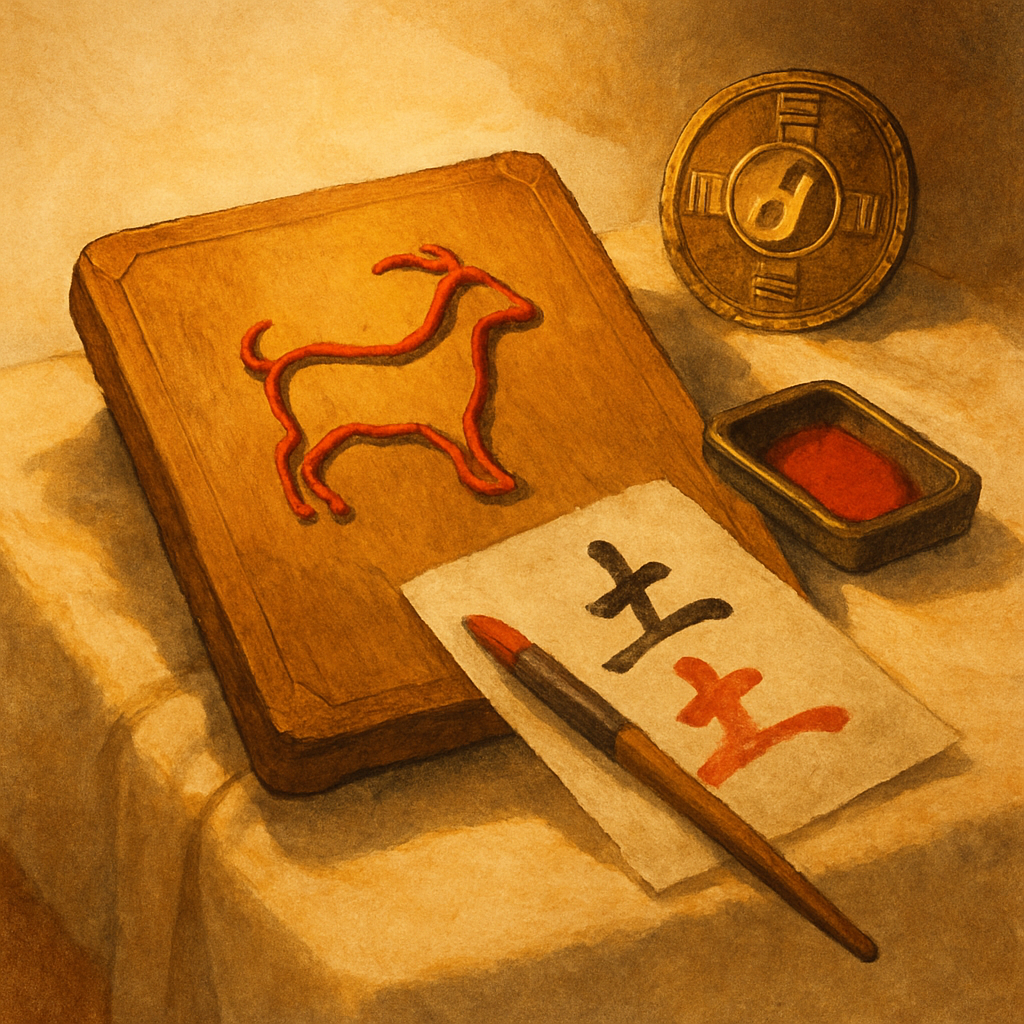
Why Is the Jeongmi Year Called the Year of the Red Goat?
The color name for each ganjji year comes from the Five Elements color system. The heavenly stem Jeong (丁) belongs to fire, and fire's signature color is red. The earthly branch Mi (未) represents the goat, the eighth of the twelve zodiac animals. Put those two together and you get the Red Goat, the combination known as Jeongmi (丁未).
Among the fire energies in the heavenly stems, Jeong-hwa is the quiet kind, closer to the glow of a candle or starlight than to a roaring blaze. Think of it less as a wildfire and more as a gentle warmth that steadily illuminates a room. That quality is exactly why 2027 tends to feel understated yet surprisingly deep.
The Five Elements Structure of the Jeongmi Year
To understand the Jeongmi year, it helps to look at the Five Elements of both the stem and the branch separately. The heavenly stem Jeong-hwa carries yin fire energy, while the earthly branch Mi-to is primarily yin earth energy. What makes Mi-to more layered, though, is that it holds hidden stems inside it, called jijanggan (藏干, concealed stems): Jeong-hwa, Eul-mok (yin wood), and Gi-to (yin earth). So it is not simply an earth energy at face value.
What kind of dynamic forms when Jeong-hwa meets Mi-to?
In the Five Elements cycle, fire gives birth to earth, a relationship called sangsaeng (相生, mutual generation). Because Jeong-hwa nourishes Mi-to, the energy of the heavenly stem flows naturally into the earthly branch. Rather than tension or conflict, 2027 has an overall quality of one force quietly supporting the other, a year that tends toward stability rather than friction.
- Heavenly stem Jeong-hwa: yin fire, a delicate and warm energy like candlelight or starlight
- Earthly branch Mi-to: yin earth, the dry late-summer ground, land that is just about to hold its harvest
- Hidden stems inside Mi-to: Jeong-hwa, Eul-mok, and Gi-to, giving the branch a complex inner quality
- Stem-branch relationship: a generating pair (fire produces earth), making for a relatively harmonious combination
The Bigger Picture for Society and the Individual in 2027
It is worth thinking about what this energy combination may bring to the broader social atmosphere. Of course, this is a map of possibilities, not a fixed outcome. Even within the same year, how the energy feels can vary considerably depending on a person's individual Saju (Korean Four Pillars astrology) chart.
The subtle light of Jeong-hwa favors going deeper over making a splash. In 2027, steady consolidation may carry more momentum than bold, outward expansion.
Years with strong earth energy tend to bring themes like accumulation, settling in, and strengthening the roots of relationships. Planting yourself firmly where you already stand can align better with the general current than rushing outward. On a personal level, this may be a time when bringing existing projects to a higher level of completion feels more natural than chasing entirely new beginnings.
If you want a sense of how each day is flowing for you right now, checking today's fortune is a simple and grounding practice. When you already have a feel for the larger picture, the day-by-day view becomes a lot clearer.
Key Combinations and Tensions to Watch in the Jeongmi Year
The earthly branch Mi-to is the final piece of the Hae-Myo-Mi삼합 (三合, three-harmony combination). If your Saju chart includes Hae-su (pig branch) or Myo-mok (rabbit branch), 2027 may complete that harmony triangle for you. Because this tends to concentrate wood energy, it can be worth paying attention to possibilities around growth, momentum, and new ventures.
On the other hand, the Chuk-Mi clash (丑未冲, a direct opposition between ox and goat branches) is worth noting. Those who have Chuk-to in their Saju chart may find the year brings some movement or instability in the earthly branch layer. Rather than reading this with anxiety, it can serve as a useful prompt to review and reinforce your foundations.
Which energies involving romance and introspection may be activated in the Jeongmi year?
In certain charts, the earthly branch Mi-to can connect to Dohwa (桃花, the peach blossom) energy, associated with heightened charm, social magnetism, and emotional attunement. How this shows up depends entirely on the full structure of an individual's Saju chart, so it is always worth reading these patterns in context rather than in isolation.
How the Jeongmi Year Plays Out Differently by Zodiac Sign
The Jeongmi year does not affect everyone in the same way. Your zodiac animal, day stem, and the full shape of your Saju chart all shape how the year's energy feels to you personally. Even two people born in the goat year can have very different experiences of Mi-to energy depending on what their day stem is.
Sajagung explores the annual fortune (called saeun, the yearly luck cycle) for each zodiac sign in detail on the zodiac fortune page. Select your sign there to get a more specific sense of what patterns and possibilities may open up for you this year.
- Goat (1955, 1967, 1979, 1991, 2003): Mi-to matches your own branch, so both self-conflict (self-punishment combination) and harmonizing resonance are worth checking at the same time
- Ox (1961, 1973, 1985, 1997, 2009): the Chuk-Mi clash structure may bring branch-level shifts, making this a good year to review your foundations
- Pig (1959, 1971, 1983, 1995, 2007): one corner of the Hae-Myo-Mi three-harmony triangle, meaning wood energy may gather and concentrate
- Rabbit (1963, 1975, 1987, 1999, 2011): the Myo-Mi half-combination structure can gently activate wood energy
What You Can Do to Prepare Before 2027 Arrives
Knowing the year's broader energy in advance can bring a little more clarity to the choices you make day by day. The fire-generates-earth current of the Jeongmi year tends to support patient, steady building over impulsive leaps forward. Simply taking the time now to understand your yongsin (用神, the favorable element in your chart) and gisin (忌神, the unfavorable element) can make a real difference in how prepared you feel going into 2027.
Before looking far ahead, checking in with today's energy is a perfectly good starting point. Small daily currents add up to shape the character of a whole year. Visit Sajagung's daily fortune to see what energy is moving through your day right now. Getting grounded before the Jeongmi year fully opens can make the transition into the new year feel considerably smoother.
The candlelight quality of Jeong-hwa in 2027 is less about sweeping change and more about offering a steady, quiet warmth. May this be a year when you go a little deeper right where you are, rather than rushing toward the next horizon.